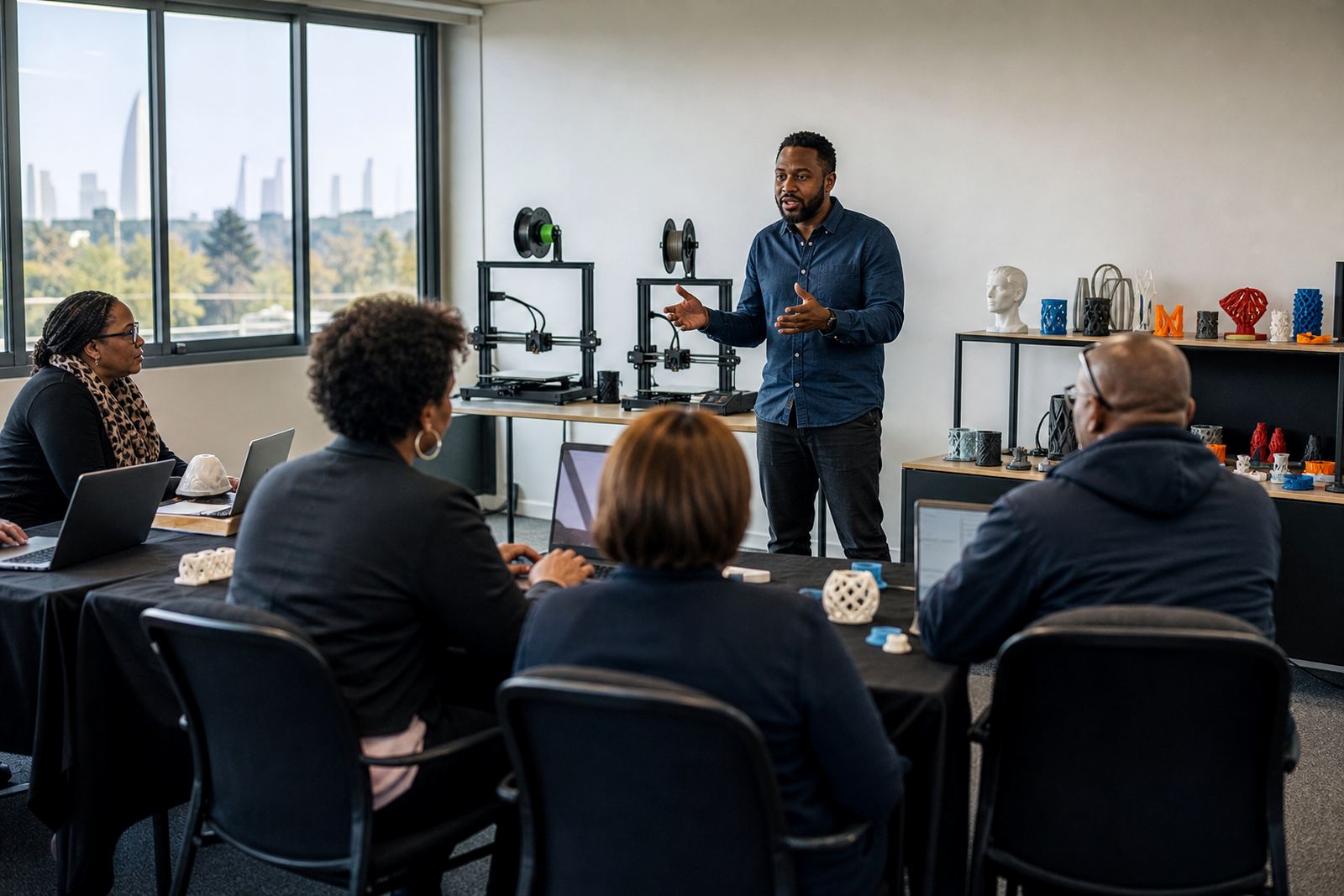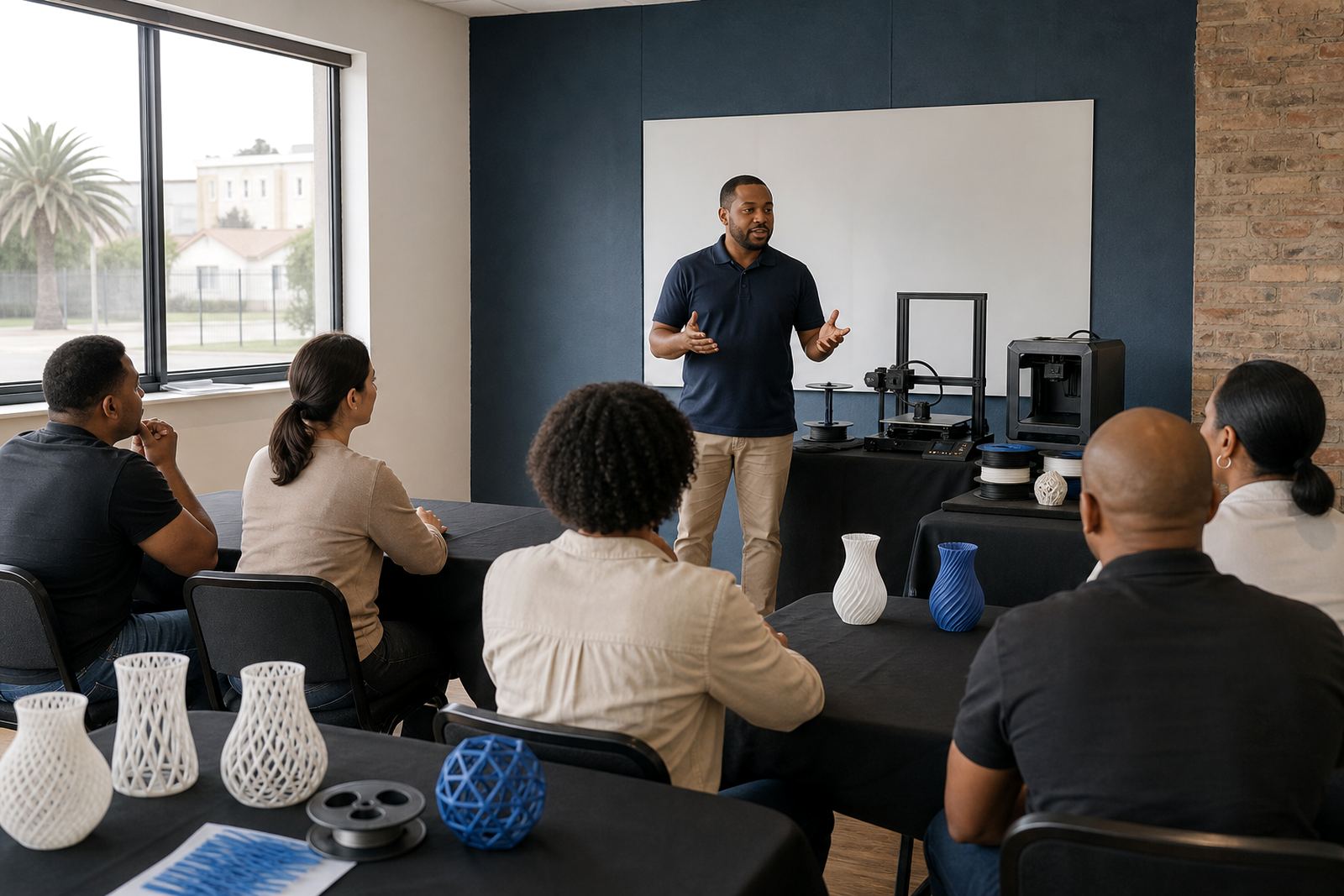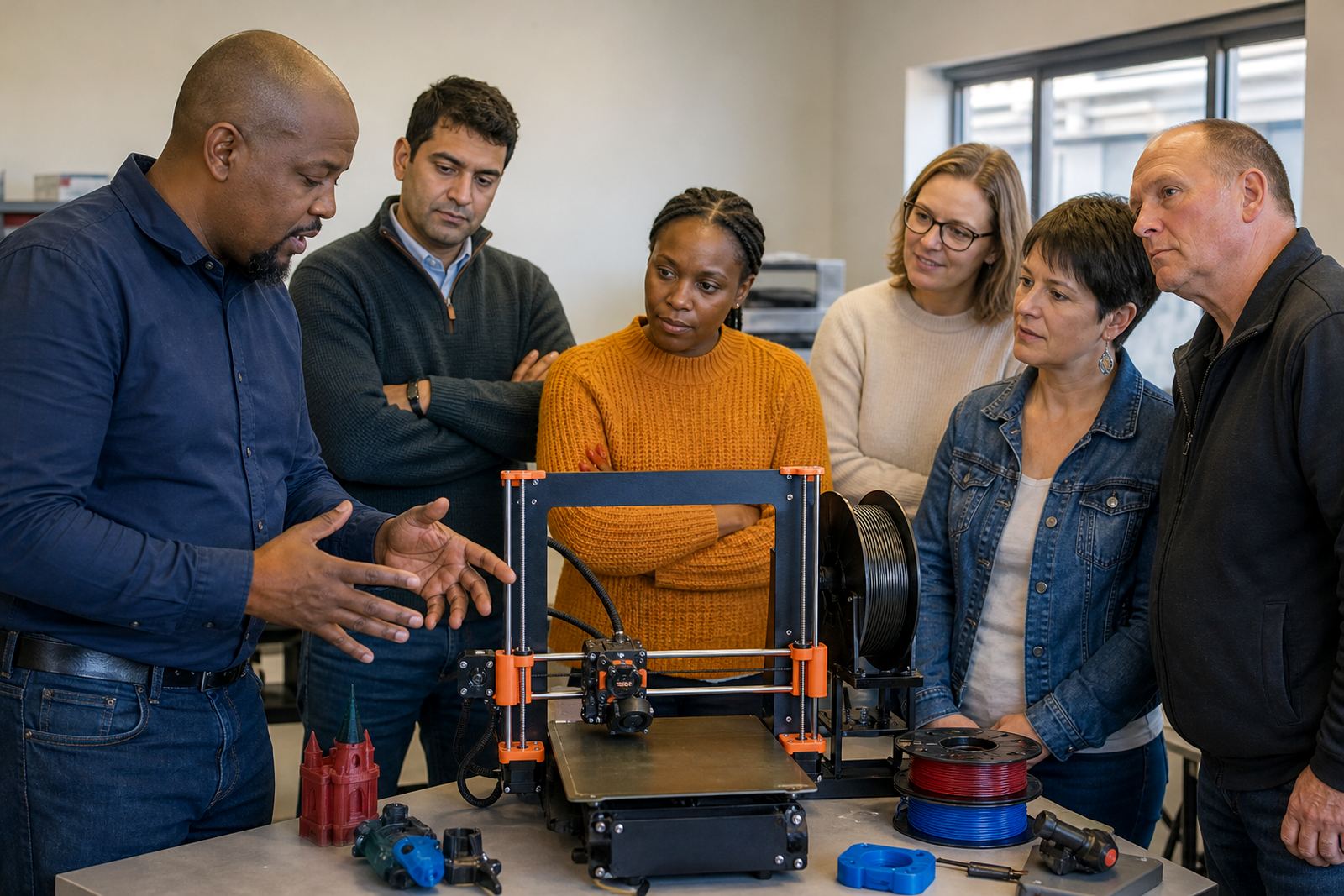

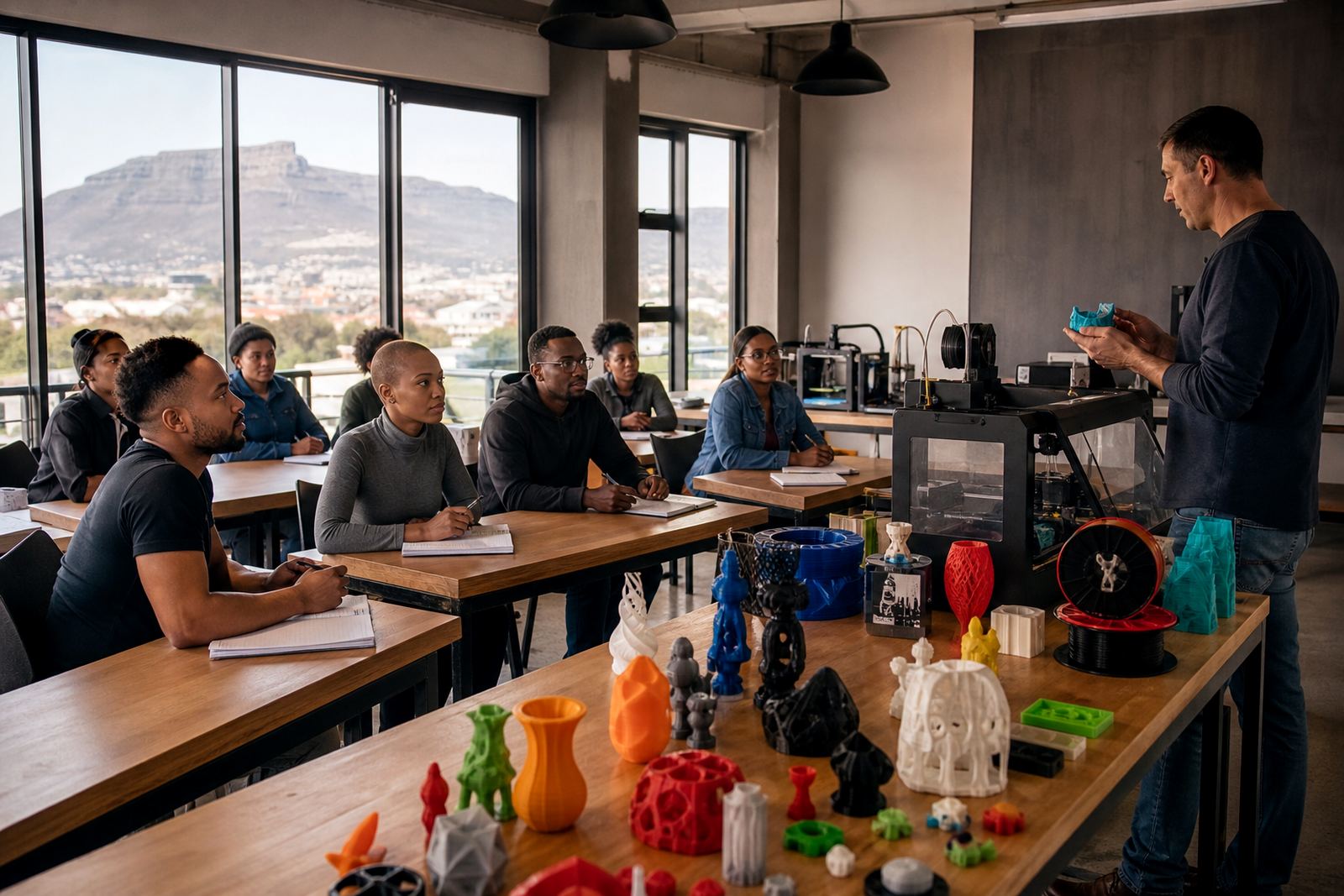
Cape Town training for busy school terms
Our Cape Town training is set up for schools that need practical sessions without wasting a full day on theory. We work with teachers, lab coordinators and school managers who need clear steps for classroom use, learner safety and everyday printer handling. Sessions can be arranged for groups from one school or for mixed school teams, depending on the brief.
The focus is on usable skills. That means getting to grips with 3D design basics, printer operation, job preparation, filament handling and simple troubleshooting that staff can repeat later on their own. If a school is starting from scratch or expanding an existing lab, we can shape the session around that point.
- Teacher Introduction for first time exposure
- Teacher Intermediate for staff already using a printer
- CAD Basics for classroom design work
- Printer Operations and daily handling
What Cape Town schools usually ask for
We often work with independent schools, public schools, after school makers clubs and academic support teams across the Cape Town metro. Some call us for a single staff workshop, while others want a longer pathway that includes teacher training, learner-facing content and a plan for the lab itself. The most common need is getting a room ready so it can be used safely and kept in order once the visitors have gone home.
School teams in the city and surrounding areas often need practical advice on ventilation, table space, power points and storage. In the Western Cape you also have to think about load shedding and coastal humidity, so the set up needs to be sensible from day one. We keep the advice grounded in what schools can actually maintain and manage, not what sounds good on paper.
- Ventilation and safe printer placement
- Power backup planning for outages
- Filament storage for humid coastal conditions
- Simple classroom rules for supervision and cleanup
Lab kits and classroom equipment covered in training
When we support a school lab, we look at the full working environment, not just the printer itself. That includes what learners will use at the table, what staff need for setup and maintenance, and how the room will function during a normal school week. We can walk teams through the parts commonly included in a classroom 3D-printing space, with guidance on what to keep locked away and what should stay within reach.
Typical items and topics covered include the basics needed to get started and keep lessons moving:
- Benchtop 3D printers for education use
- Starter filament in common classroom colours
- Computer and design software requirements
- Tool kits for removing prints and cleaning beds
- Storage for materials, spares and finished models
If a school wants help deciding what to order first, we can talk through a staged approach. That is often the best way to avoid buying too much at once and then finding the room is too small or the workflow is awkward.
Travel, turnaround and planning around the Cape
Because we are based in Stellenbosch, Cape Town sessions are straightforward to organise and the turnaround on scheduling is usually quick. For schools in the city bowl, southern suburbs, northern suburbs, Table View, Helderberg and the wider metro, travel is managed as part of the booking discussion. That helps schools plan around transport, room access and when staff are actually free.
We try to keep the process practical from the first enquiry to the day on site. If the visit is for a team workshop, we confirm the number of attendees, the level of experience and whether the school needs hands on printer time or only planning support. For lab setup visits, we will ask about room size, available power and the current equipment so the session is properly matched to the space.
Safeguards that matter in a school environment
3D printing works best in a school when the room rules are simple and consistently followed. We give general classroom safety reminders that help staff manage learners around printers, tools and warm components. The aim is to keep the room orderly and to reduce avoidable interruptions during lessons.
Typical guidance includes keeping learners supervised around active machines, storing tools away after use, allowing printed parts to cool before handling and keeping cords tidy so walkways stay clear. In busy school terms, that sort of routine matters more than fancy equipment. It also helps when different teachers share the same room and need the set up to be predictable.
- Keep hot nozzles and moving parts out of reach
- Label materials and store them in a dry cupboard
- Use a clear sign in and sign out process for tools
- Check prints before learners handle them
How to arrange a Cape Town session
Enquiries for Cape Town Training go through the contact page form. Once we receive the details, we can respond on the most suitable course, the school level involved and whether the visit is for training, lab setup or a mix of both. If you already know the room size or the number of staff attending, add that in the form because it helps us plan the session properly.
We support schools across Cape Town as well as nearby areas such as Paarl and Somerset West when the brief suits the route. Whether the request is for Teacher Introduction, Learner Foundations, Maintenance Basics or a custom group workshop, the starting point is the same: a clear enquiry and a practical discussion about what the school needs to do next.