Durban schools that need practical 3D printing support
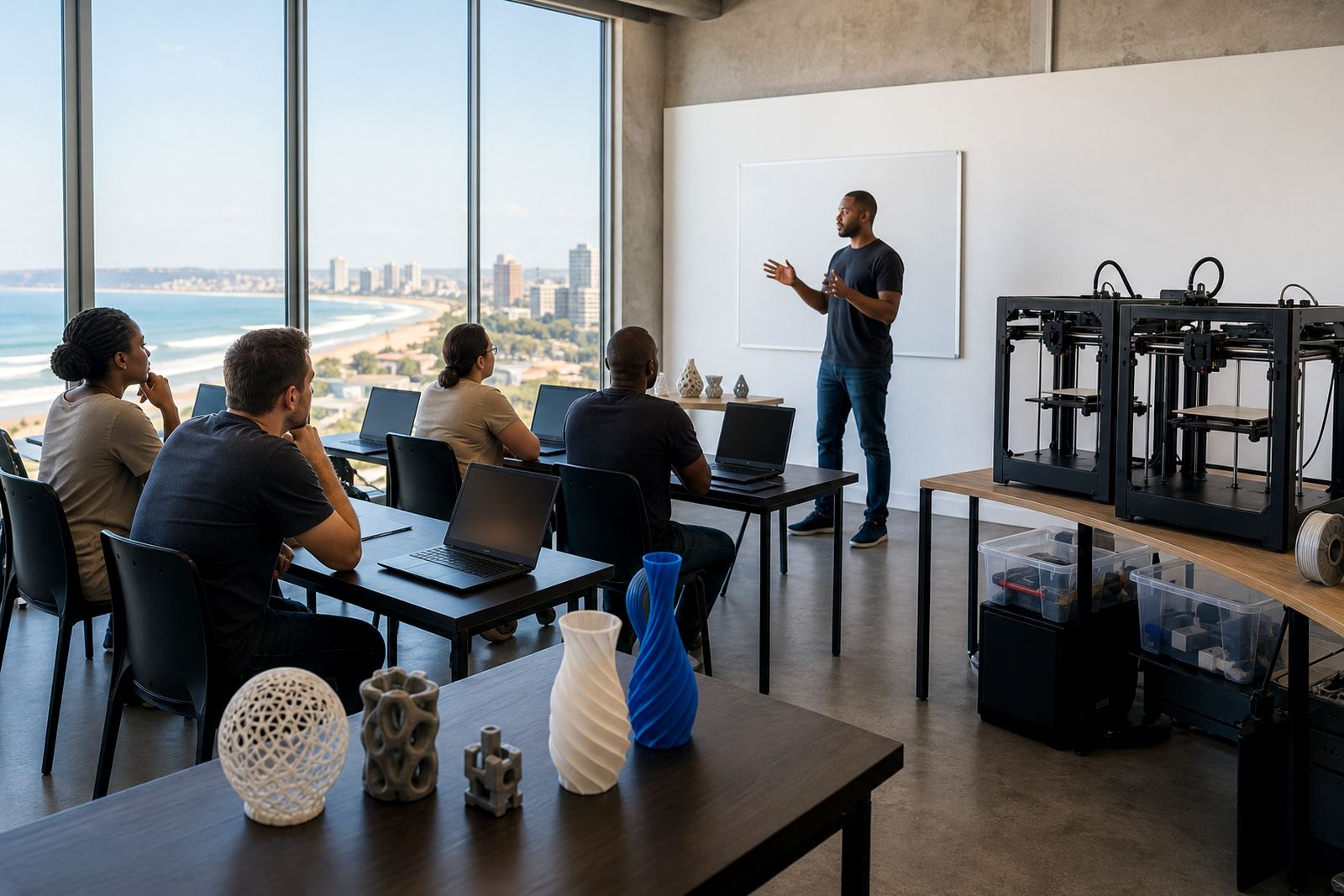
Our Durban training is suited to schools building confidence in classroom 3D printing use. We work with primary schools, high schools and after-school programmes across Durban, from central suburbs through to the wider metro, where teachers need a simple way to bring design and making into lessons without adding strain to an already full timetable.
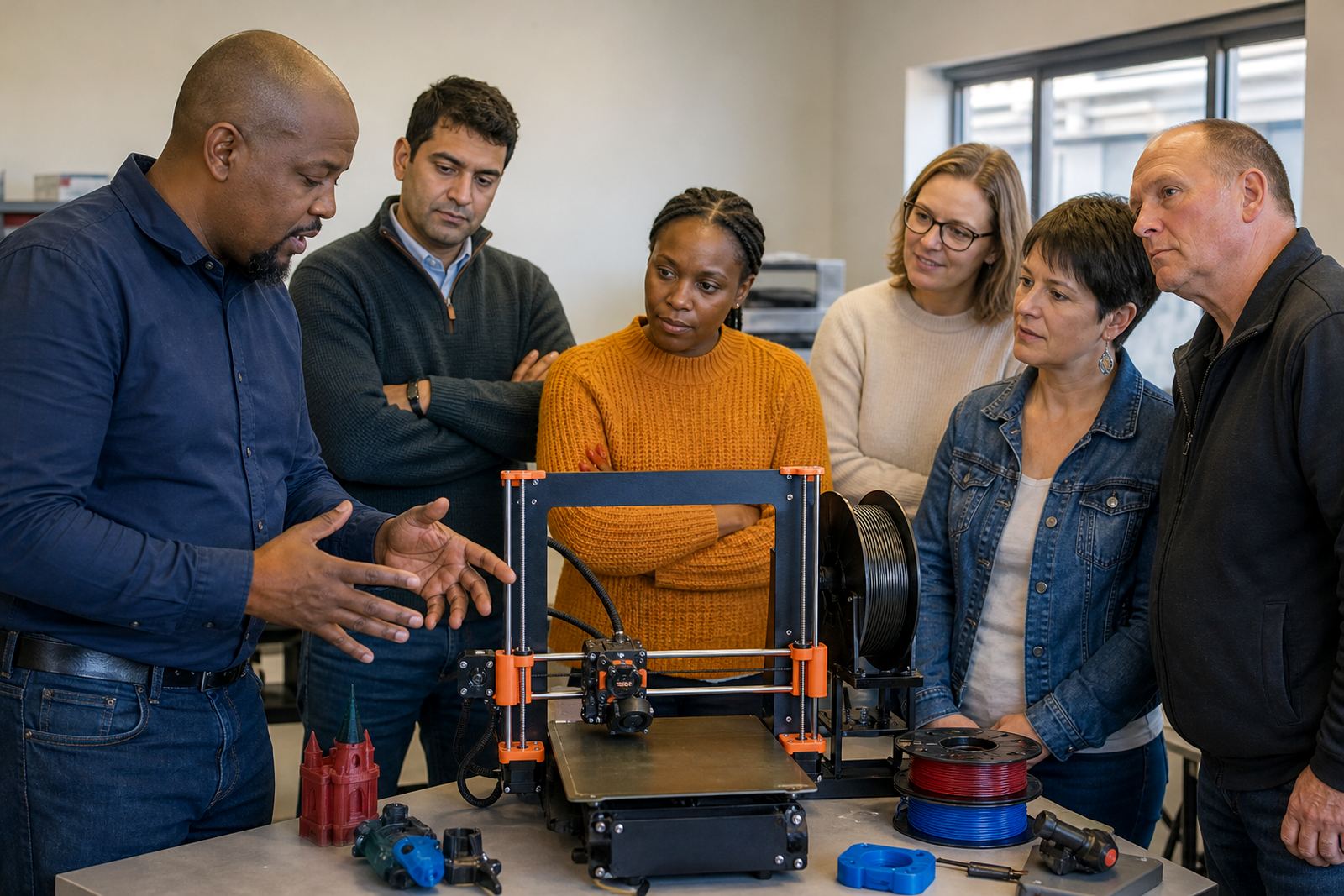
The focus is on practical use in ordinary school conditions. That means clear steps for design, printer operation, basic troubleshooting and safe handling. We also cover what works well in rooms that are shared for different subjects, where storage is limited and where equipment has to be packed away properly at the end of the day.
- Teacher introduction sessions for first-time users
- Learner foundations for supervised classroom groups
- Printer operation and routine checks
- CAD basics for simple classroom projects
- Project planning for term work and clubs
What we cover during Durban training visits
Each Durban visit is shaped around the school’s starting point. Some schools already have printers and need help getting staff comfortable with the process. Others are planning a new lab and want guidance on how to set it out, what consumables to keep on hand and how to run lessons without confusion at the machine.
We cover the main classroom steps from basic design through to finished print. Where needed, we also go through file preparation, bed levelling, filament loading, print monitoring and post-print cleanup. The aim is not to overwhelm staff with jargon, but to give them enough knowledge to manage lessons with confidence and avoid common errors.
- Teacher Intermediate sessions for staff who have used printers before
- Management Briefing for principals and HODs
- Custom Group Workshops for smaller teams or larger staff groups
- Holiday Programme support for holiday clubs and enrichment days
Durban conditions and what they mean for 3D printing
Durban’s coastal humidity, heat and sea air can affect how printers and filament are stored. In schools close to the coast, we usually talk about keeping filament sealed when it is not in use, placing equipment in a stable indoor space and avoiding damp storage rooms. If a school has load-shedding to manage, we also look at how to plan print times so jobs do not fail halfway through the day.
Local practicalities matter. Power interruptions, shared classroom space and dust all affect how smoothly a lab runs. We advise on basic safeguards, clear house rules for learners and simple routines for starting up and shutting down equipment. Nothing complicated, just the sort of steps that keep a lab working week after week.
- Humidity-aware filament storage advice
- Power planning around load-shedding schedules
- Safe workspace layout for busy classrooms
- Basic care routines for printers and tools
School lab kits for Durban classrooms
For Durban schools setting up a new lab, we supply school 3D-printing lab kits designed for classroom use. These kits are put together to help schools get started with the equipment and support items needed for teaching, not just the printer itself. We look at the space available, the number of learners, the age group and how the lab will be supervised.
Typical kit discussions include where to place printers, what teaching materials are needed, and how to manage storage for tools and filament. If a school needs a staged rollout, we can cover that too, so the lab can be introduced in a manageable way rather than all at once.
- 3D printers and classroom support equipment
- Filament planning for first terms of use
- Tools for setup, cleanup and basic maintenance
- Storage and organisation ideas for school labs
Travel, turnaround and how Durban bookings work
We serve Durban schools from our Stellenbosch base and arrange training around the school calendar, staff availability and the project type. For some schools, a single visit is enough to get staff started. For others, we plan follow-up sessions after the first few lessons so teachers can raise questions once they have used the equipment in class.
Turnaround depends on the type of training requested and the size of the group. We keep the process straightforward: schools send an enquiry through the contact page form, share their location and outline what they need, then we confirm the best approach. Where needed, we can also discuss nearby areas in KwaZulu-Natal if the training group is made up of more than one school.
Typical Durban clients include independent schools, public schools, technical departments, makerspaces linked to education and teacher groups wanting a practical introduction before buying equipment or rolling out a lab.
Hands-On 3D Printing For Durban Classrooms
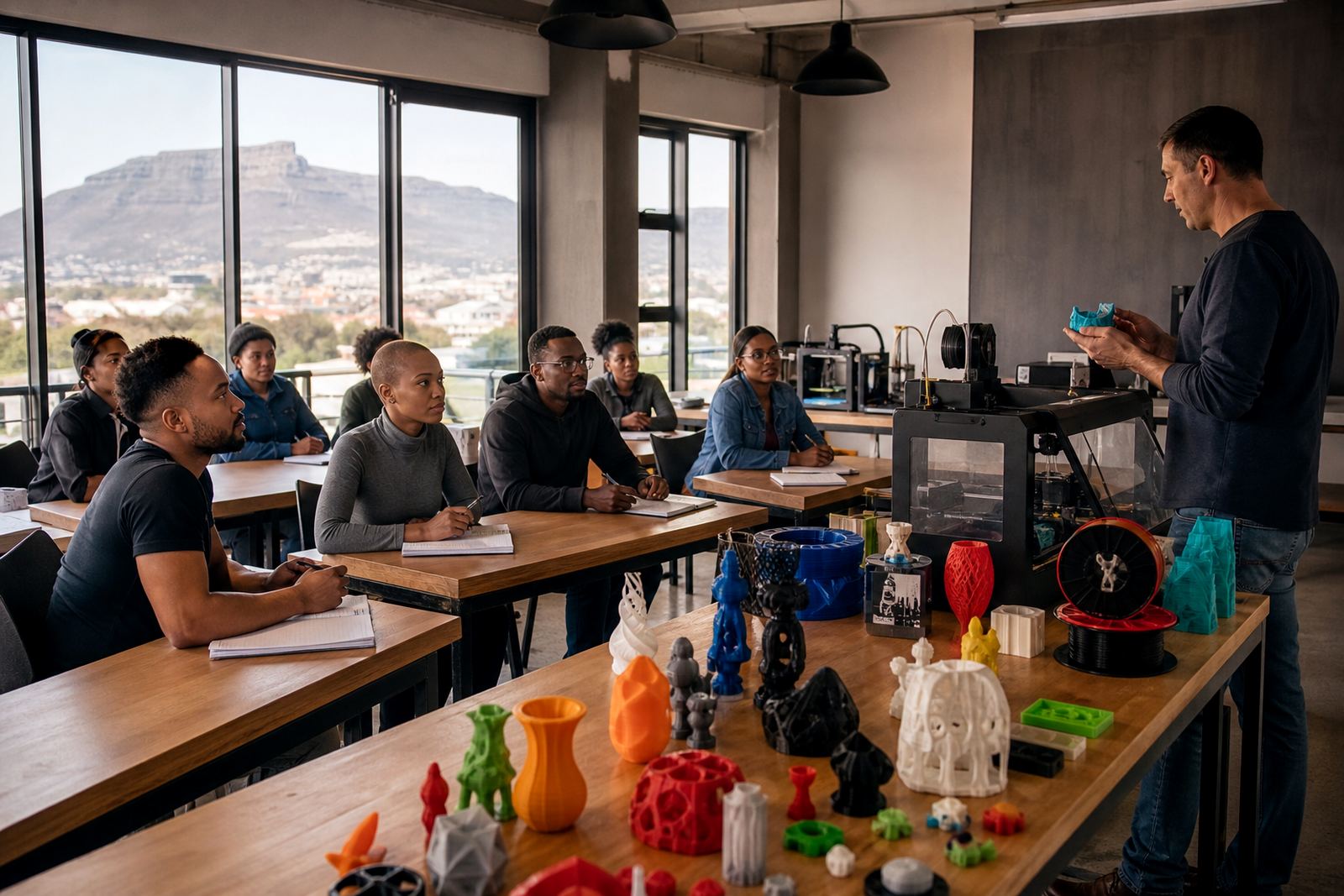
3D printing works best when teachers can see the whole process clearly, from a digital idea to a physical object learners can hold. That is why the Durban training focuses on classroom use, not theory alone. Learners stay engaged when they can design, test and improve their work, and teachers need simple methods that fit the school day.
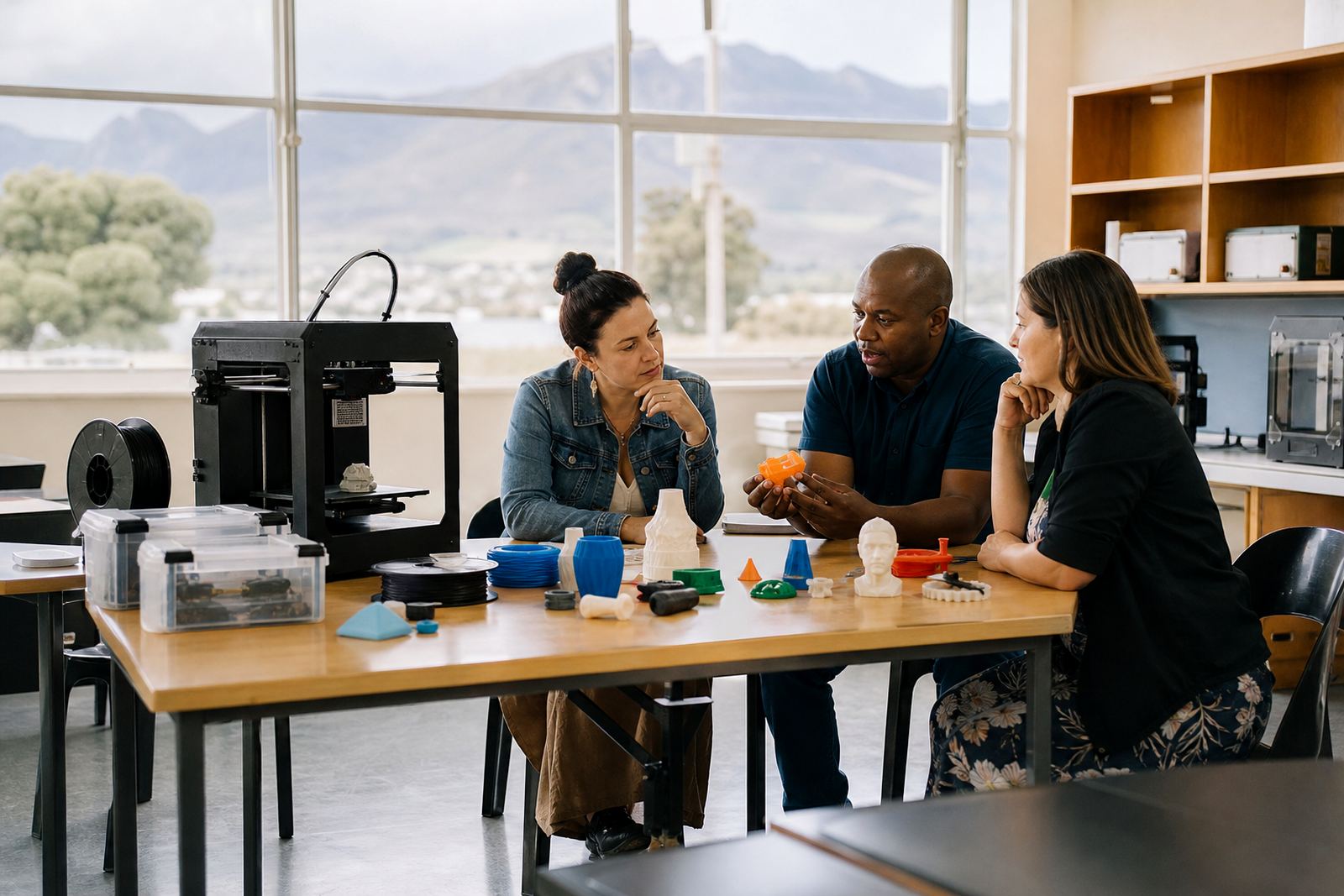
Our team includes people who support planning, technical setup, training delivery and curriculum content. That means Durban schools can ask about lesson structure, equipment care, workshop flow and how to keep learners safe around hot nozzles, moving parts and basic tools. We do not overcomplicate the process. We help schools get organised, make informed choices and use the technology properly.