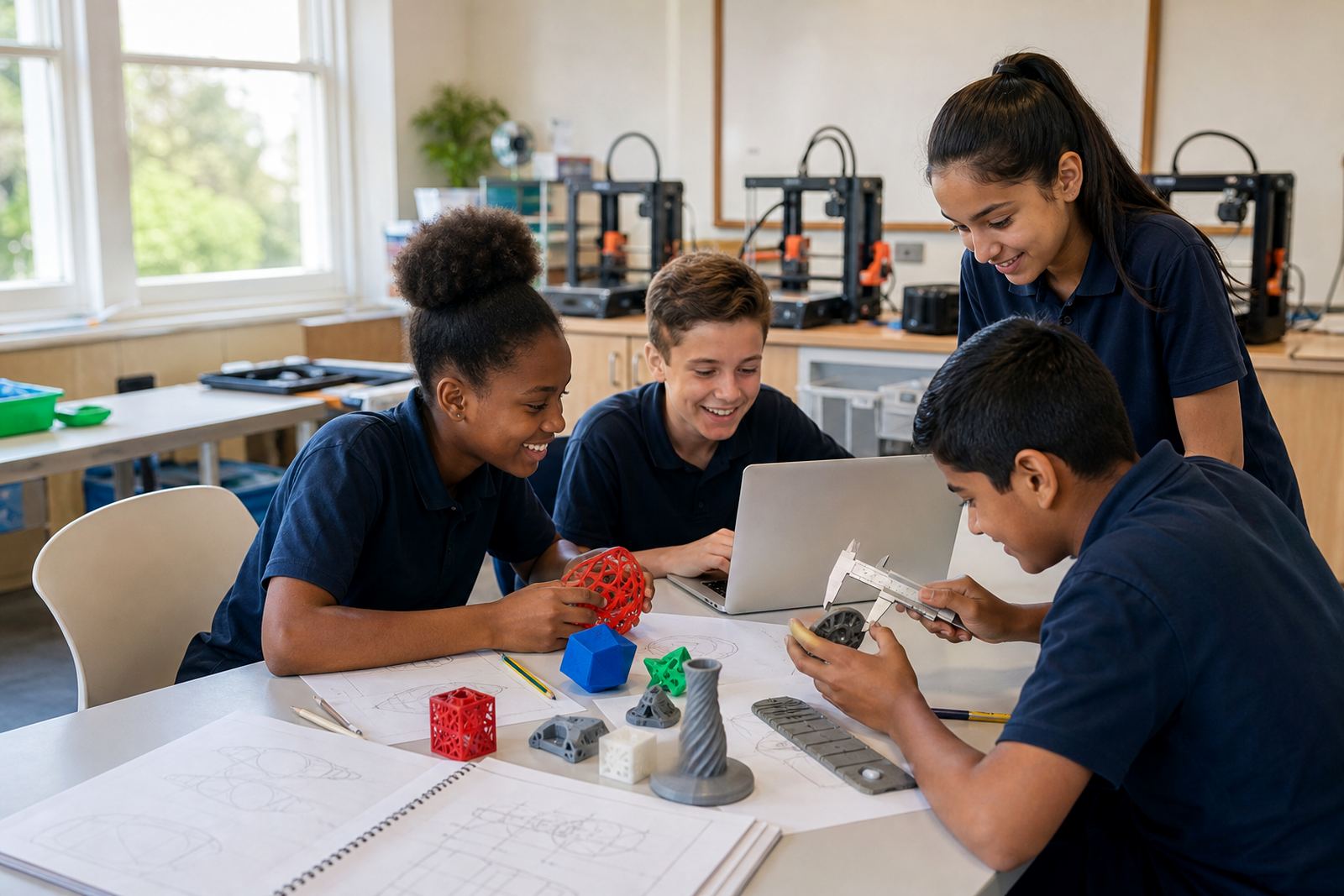
What the Learner Design Pack includes
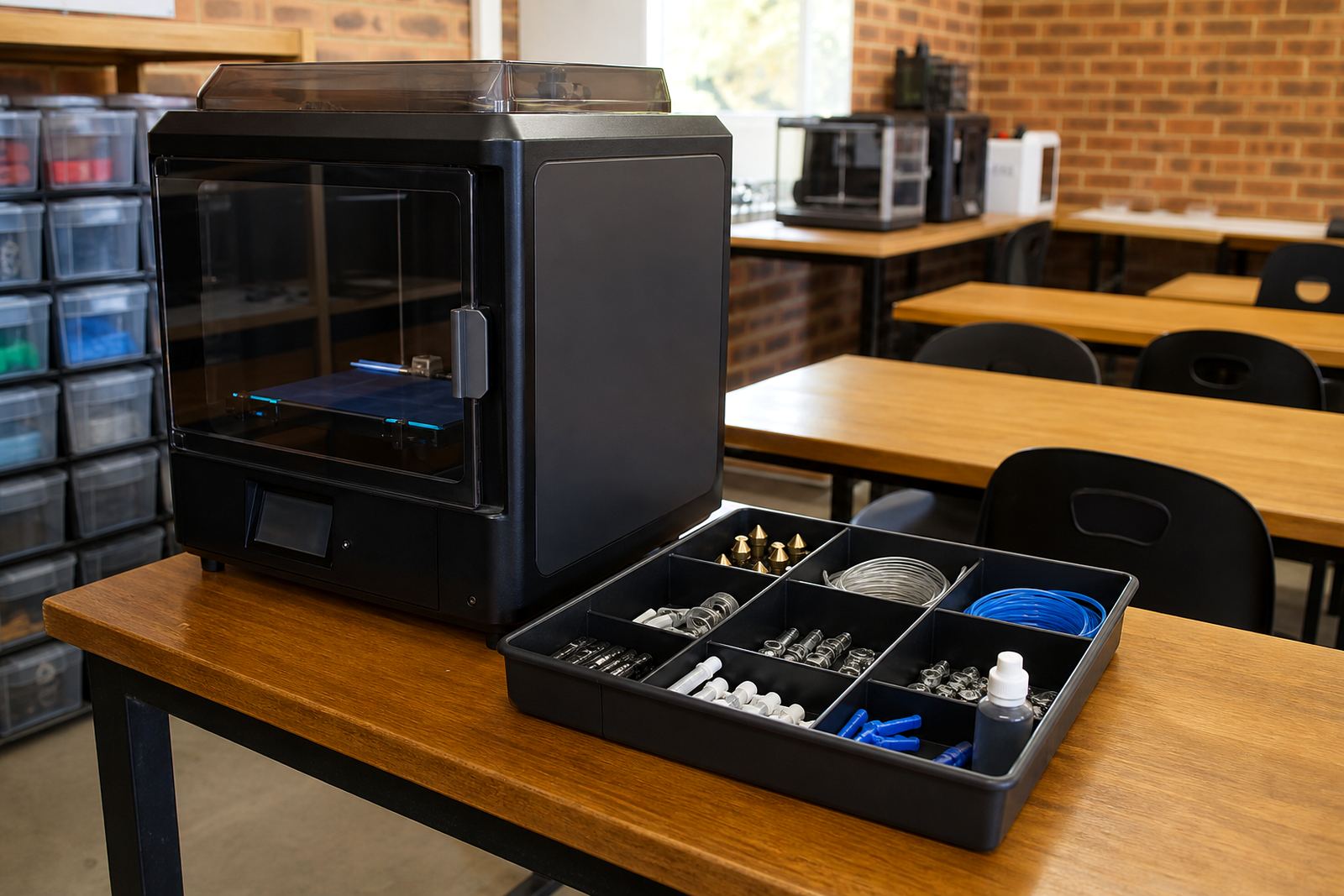
The Learner Design Pack is a classroom support pack built around the early stages of 3D design and print review. It is not a printer on its own. Instead, it gives learners the accessories and handling tools needed to measure, prepare, check and compare printed models in a tidy learning space. Schools use it to support CAD lessons, model inspection tasks and group project work where each learner needs practical access to the same basic kit.
The pack suits teachers who want a simple way to introduce design thinking without sending learners straight to a full production setup. It works well beside benchtop printers, slicer lessons and printed prototype review. For schools in Stellenbosch, Cape Town, Johannesburg, Pretoria, Durban and Gqeberha, it is a sensible add-on for classrooms that already have a 3D printer or are planning one in the future.
The contents are selected for day to day handling in a classroom. That means items that can be shared, cleaned and put away after each session, with no complicated installation. If a school has younger learners, the pack helps keep the design process practical and orderly, while older learners can use it for more detailed part checks and presentation work.
Best fit for classrooms, clubs and small labs
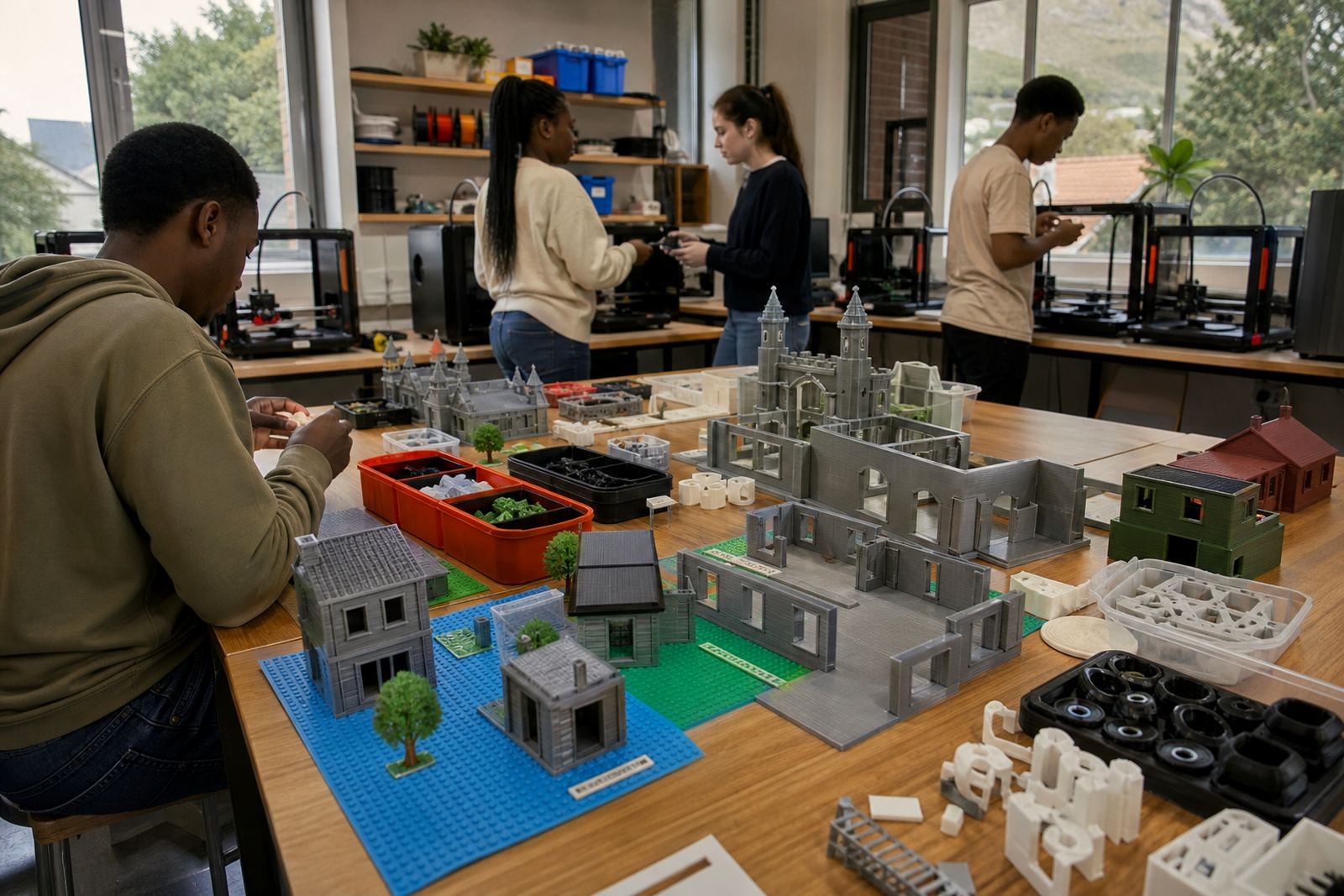
This pack is suited to schools that need a low-fuss way to support 3D-printing education. It is commonly used in technology classrooms, robotics clubs, holiday programmes, after-school makerspaces and teacher training sessions. It also works for schools running one printer in a shared venue, where equipment has to be portable and easy to store.
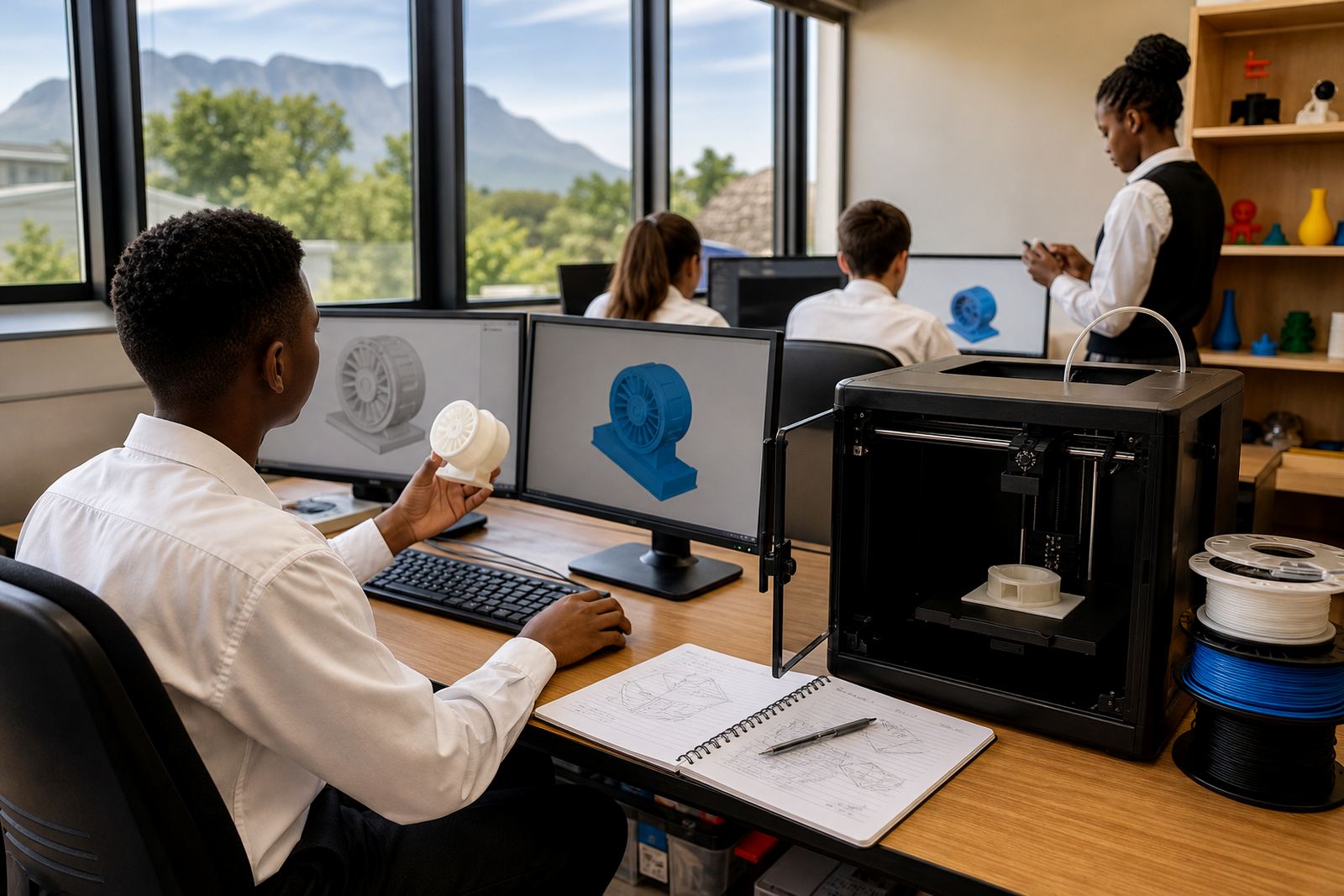
It is particularly useful where the learning goal is not only to print an object but to understand the process behind it. Learners can compare a digital design with a finished print, check tolerances, spot surface issues and discuss how a model could be improved before the next print cycle. That kind of review is useful in schools that want practical learning without overcomplicating the setup.
- Suitable for Foundation Phase support activities where adult supervision is close and tasks are simple.
- Useful for Intermediate and Senior Phase learners working on design, measurement and prototype review.
- Handy for teacher demo tables and mobile training sessions between campuses.
- Works in coastal and inland schools alike, with normal classroom storage and no special mounting.
Sizes, options and classroom quantities
The Learner Design Pack is supplied in classroom-friendly quantities, with options that suit a small group, a class set or a shared lab. Schools often choose a starter pack for one teacher and a group pack for repeated lessons. Where a programme runs across several grades, it is possible to keep one pack per class and rotate it between sessions.
For storage, the accessories are compact and can be kept in a cupboard or on a trolley. That helps in schools where classrooms are shared and equipment needs to move between rooms. In larger schools, the pack is often ordered as part of a wider lab setup with printers, filament storage and lesson support items.
- Starter pack for one facilitator and a small learner group.
- Class pack for regular lessons with shared handling tools.
- Multi-pack option for schools with several classrooms or grade groups.
- Optional add-ons for schools that need extra spares for busy terms.
When planning quantities, schools should think about how many learners will handle the same items in one period and whether the pack will be used for demonstrations only or for individual hands-on tasks. That makes a big difference to what should be ordered first.
Setup, power and room requirements
The pack itself does not need a special electrical connection. It is intended for use alongside a printer, computer station or design table. Schools only need a clean, dry room with enough surface space for learners to work safely and keep small parts in order. If used in a lab with printers, normal classroom power points and a stable table arrangement are usually enough.
No gas supply is required. There is also no fixed installation, which makes the pack easy to move between rooms or pack away at the end of the day. In schools affected by load-shedding, the value of a manual learner pack is that design review can still continue even when the printer is off. Learners can measure, annotate and plan the next print while power is limited.
For the best results, keep the work area well lit and away from food, drinks and wet surfaces. A small bench mat or tray helps prevent parts from rolling off the table. If the pack is used in a coastal school, it should be stored in a dry cupboard to avoid damp on paper items and metal tools.
Care, storage and classroom servicing
Daily care is straightforward. Wipe tools after use, return each item to its case and keep printed parts separate from fresh work. A quick check at the end of the lesson helps prevent missing pieces and keeps the next class from wasting time. Schools that run frequent sessions should assign one teacher or lab assistant to do a weekly stock check.
- Store the pack in a dry cupboard or lockable trolley.
- Keep sharp or pointed items out of reach of younger learners when not supervised.
- Do not leave parts near open windows where wind can blow small items away.
- Clean any dust or filament off tools before packing them away.
Servicing is limited because the pack contains simple accessories rather than powered equipment. If a classroom uses the pack alongside a printer, the printer itself will need normal routine maintenance, but the learner pack only needs replacement of worn or missing items from time to time. That makes budgeting easier for schools in Paarl, Somerset West and other areas that prefer predictable classroom supplies.
What to check when ordering
Before placing an order, schools should check how the pack will be used and how many learners will handle it at one time. A teacher running a single demonstration class will need a different quantity from a school that wants to use the pack across several grades. It also helps to confirm whether the pack will sit in one lab or move between venues during the week.
Check the age group, the number of sessions per term and whether the school already has printers and computers available. If the pack is part of a new lab, it may be useful to combine it with training for teacher confidence, printer operation and basic maintenance. Where a school has limited space, it is also wise to confirm storage before ordering extra accessories.
- Age group and learner count per session.
- Current printer setup and available computer access.
- Storage space, trolley space or cupboard space.
- Whether you need a starter set or a larger class quantity.
For schools across South Africa, especially where delivery timing matters and room space is tight, getting those details right helps avoid delays. A clear order also makes it easier to match the learner pack to the actual classroom use, not just the idea of it.
Key facts
| Product type | Classroom support pack for design workflow and printed model review |
|---|---|
| Use case | Learner activities, teacher demonstrations, maker clubs and holiday programmes |
| Power requirement | None for the pack itself |
| Gas requirement | None |
| Storage | Dry cupboard or lockable trolley |
| Typical pairing | Benchtop 3D printer, computer station and supervised classroom table space |