
What the mobile lab cart includes
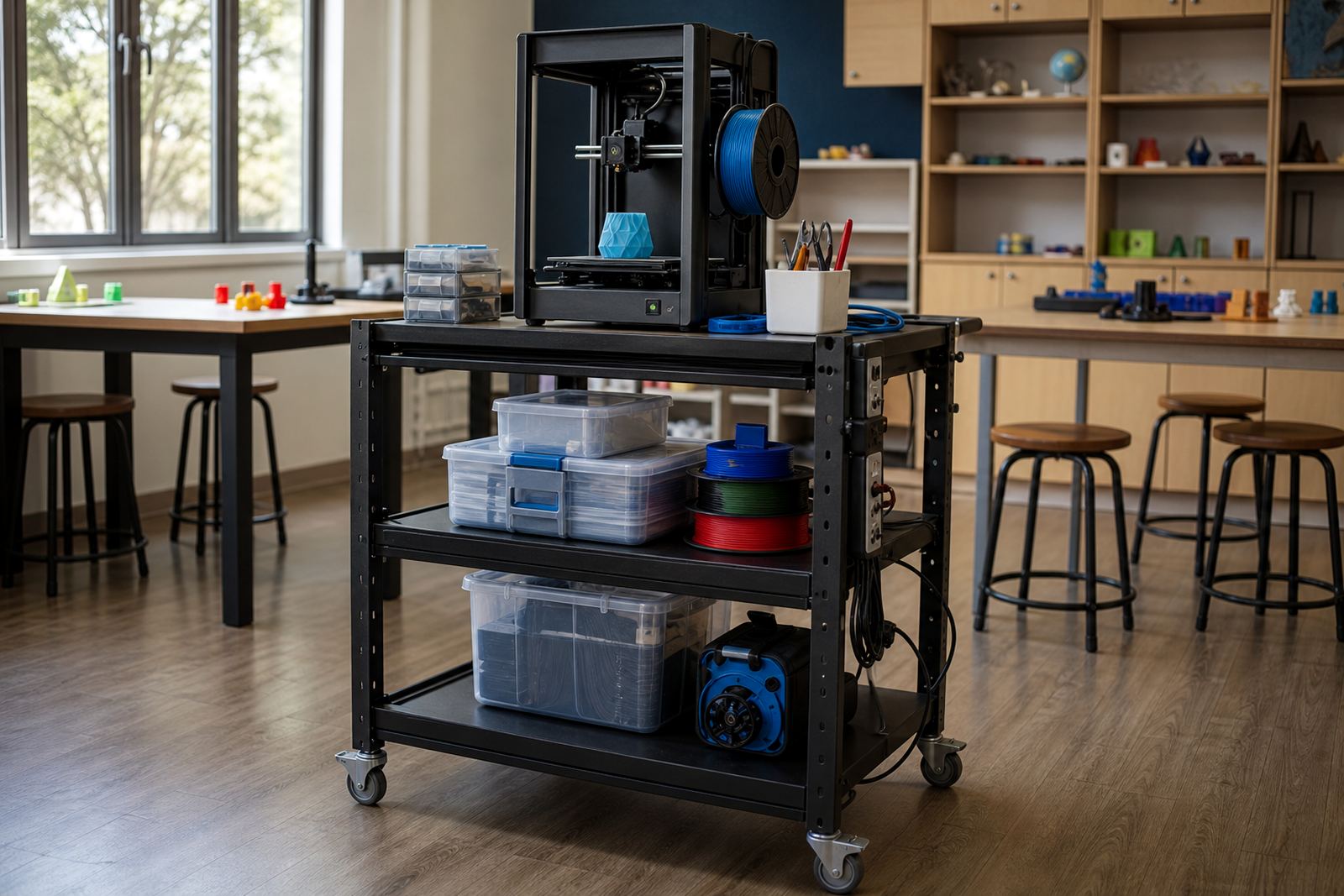
The mobile lab cart is a purpose-built trolley for schools that want a 3D-printing area that can shift between rooms without carrying loose equipment by hand. It is typically fitted with lockable castors, shelving for printers and tools, storage for filament, and a worktop for setup and learner handling. The cart can be used as a single printer station or as a shared teaching unit for guided lessons.
Most schools use it for one or two benchtop 3D printers, depending on the footprint and load capacity chosen. The frame is designed for indoor use and for regular movement over smooth floors such as classroom vinyl, polished concrete and tiled corridors. In schools where space changes through the day, the cart helps keep the equipment in one place when not in use, then moved into a classroom or lab when needed.
- Lockable wheels for controlled movement and parking
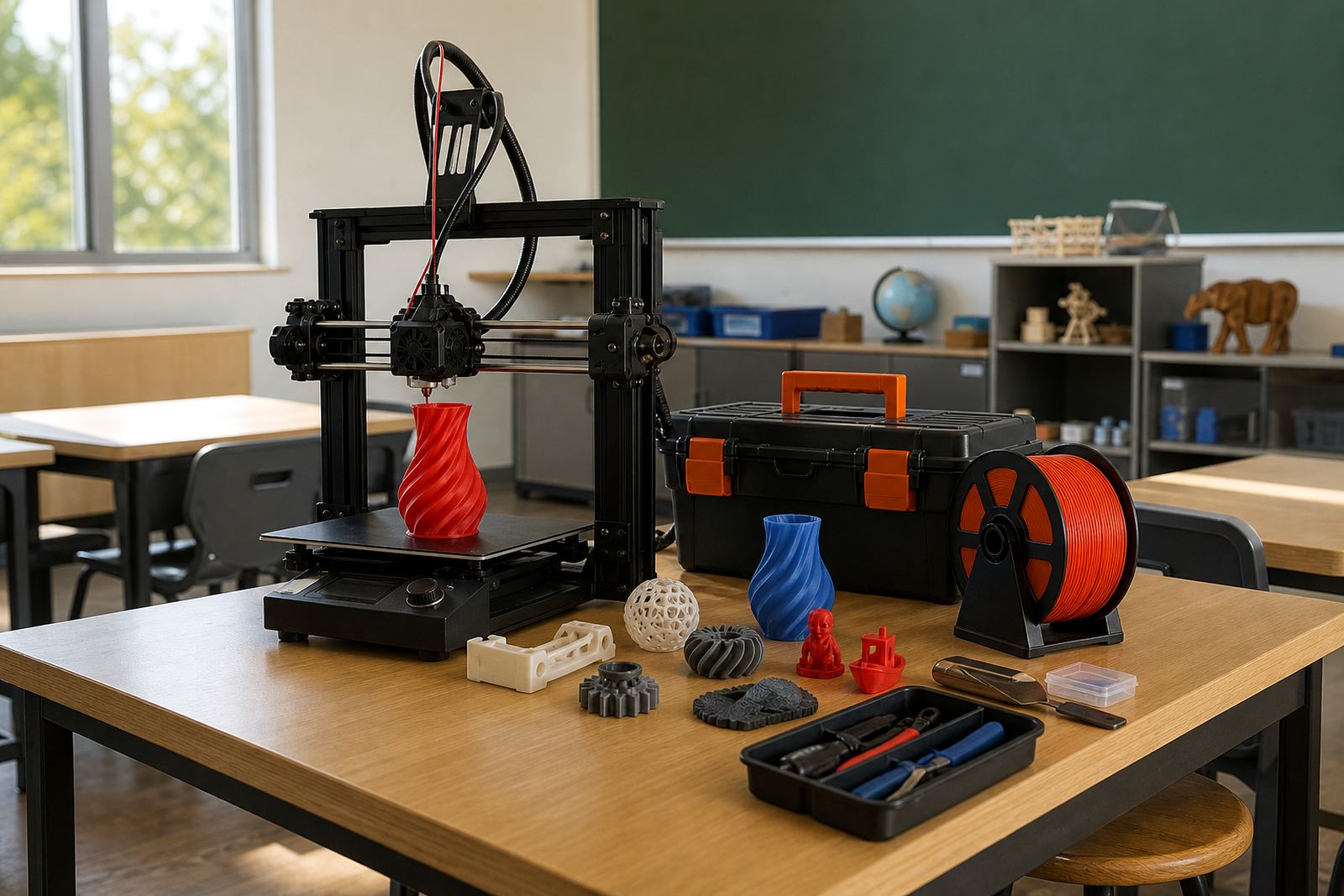
- Shelving for printers, filament, tools and maintenance items
- Optional cable management and power-board mounting
- Work surface for loading models and checking prints
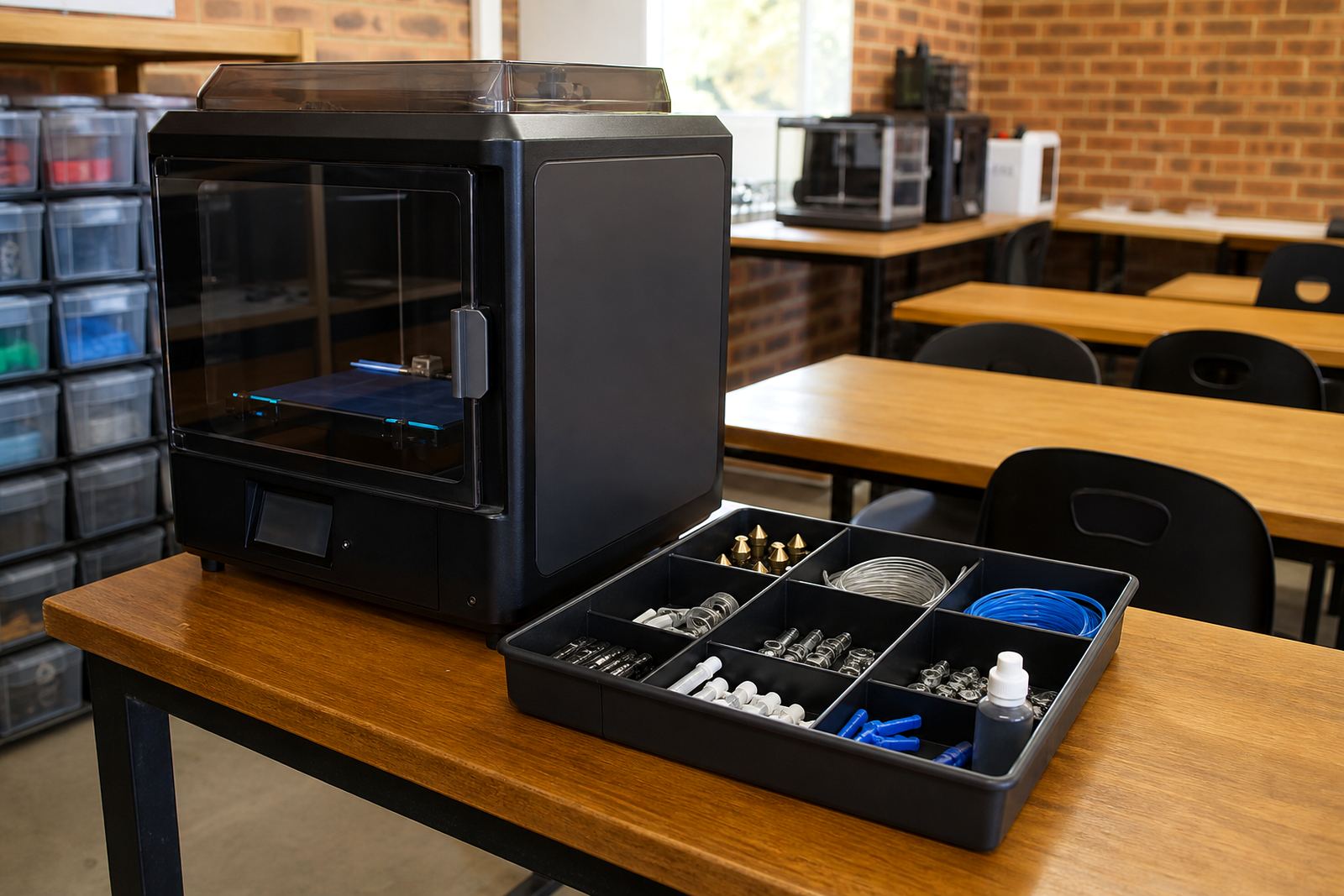
- Storage area for parts, gloves, tweezers and cleaners
Sizes and layout options for different school spaces
Schools in Stellenbosch, Cape Town, Durban or Johannesburg often have very different room sizes, so the cart can be supplied in a few practical formats. A compact version suits a small classroom or resource room, while a larger cart gives more shelf space and a wider worktop for one teacher managing a group. If the cart needs to pass through narrow doorways or older school corridors, overall width and turning radius should be checked before ordering.
Typical options include a single-printer cart, a dual-printer cart, and a teaching-focused version with extra storage below. Some schools also prefer a cart with a raised guard rail around the top shelf so printers sit securely during movement. If the unit will be stored in a shared room, lockable doors or a lockable front panel can be added for better control of tools and consumables.
- Compact cart for one printer and basic tools
- Medium cart for one printer with extra filament storage
- Larger cart for two printers or a printer plus lesson materials
- Optional lockable storage section for supervised access
- Choice of shelf spacing to suit different printer heights
Where a mobile cart works best in school use
This product suits schools that share technology rooms across several classes, or where a single lab must serve different subjects through the week. It is useful for Life Orientation, CAT, STEM clubs, design lessons, holiday programmes and teacher demonstrations. In smaller schools, the cart can help avoid setting aside a permanent room that stays underused for part of the year.
The cart is also practical where access needs to be managed carefully. A teacher can wheel it into a supervised space for a lesson, then return it to secure storage afterwards. That is helpful in schools with mixed timetables, visiting classes, or limited preparation rooms. In coastal areas, where humidity can affect filament storage, keeping materials on the cart in sealed containers or dry storage boxes is a sensible habit.
- Shared technology rooms
- Temporary teaching spaces
- After-school clubs and holiday programmes
- Smaller schools with no dedicated lab room
- Schools that need equipment to be stored securely between lessons
Installation, power and room setup
The cart usually arrives as a ready-to-use unit or with simple assembly depending on the chosen format. Schools should place it on a level indoor floor and check that doors, ramps and corridor corners allow safe movement. If the unit will be used on more than one floor, it should be moved only where staff can control the route and where the surface is smooth enough for loaded castors.
Power needs depend on the printers supplied with the cart. In most cases, a standard 220V school supply is used, with a properly rated extension lead or power board mounted to the cart. Schools should not overload one plug point with printers, heaters and extra appliances all at once. In areas with load-shedding, it helps to plan lessons so that printer setup, slicing and learner prep can continue even if printing pauses. If a UPS or backup supply is used, it should be matched to the equipment load and checked by a competent person.
- Level indoor floor recommended
- 220V power supply in most classrooms
- Safe cable routing to prevent trips
- Ventilation for warm print rooms and supervised use
- Route planning for stairs, thresholds and narrow passages
Care, cleaning and servicing needs
A mobile lab cart needs regular care because it is moved, handled by learners and used in busy school environments. Wipe the surfaces with a soft cloth and mild cleaner, then keep wheels clear of dust, thread scraps and small offcuts. Print beds, nozzles and tool trays should be checked after each use so the next class starts with equipment in order.
For service planning, schools should keep a simple record of movement, cleaning, nozzle changes and any printer faults. This is especially useful where several staff members share the same cart. If the cart is used near the coast, inspect metal fittings for early signs of corrosion and keep filament sealed from damp air. In inland schools, dust control matters just as much, particularly in art rooms and workshops where fine particles settle quickly.
- Weekly wheel and brake check
- Routine wipe-down of shelves and handles
- Keep tools and consumables labelled
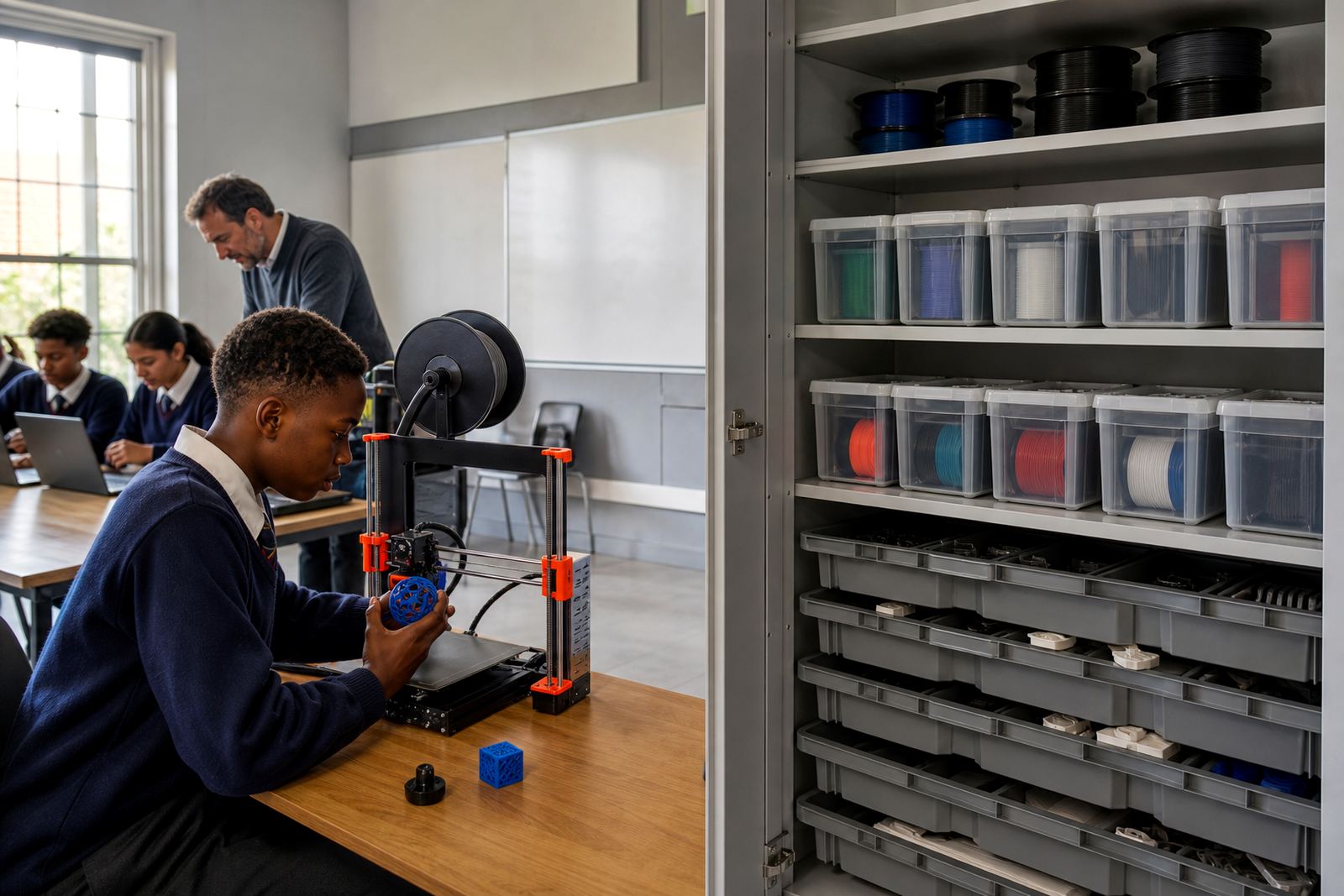
- Store filament in dry containers
- Log servicing and printer maintenance dates
What to check before ordering for your school
Before ordering, schools should confirm the number of printers they want on the cart, the size of the rooms where it will move, and who will supervise use. It is also worth checking whether the cart must fit through standard doorways, be moved over thresholds, or be stored in a locked cupboard at the end of the day. If the unit will support learners of different ages, safety access and height of the work surface should be discussed early.
It also helps to confirm the equipment list. Some schools only need the cart itself, while others want a full setup with printers, starter filament, tools and maintenance items. A clear list avoids missing parts and keeps the handover simple for teachers. If you are ordering for multiple campuses, include the delivery town, site contact person and any access rules for the school gate or loading area. Simple details save time on installation day and help the cart slot into the timetable without fuss.
- Number of printers and accessories needed
- Door widths, corridor turns and storage space
- Power points and backup power plan
- Supervision and access control arrangements
- Delivery address and campus access details
Key facts
| Cart type | Mobile school lab cart for 3D printing equipment |
|---|---|
| Typical capacity | 1 to 2 benchtop printers, depending on layout |
| Frame | Powder-coated steel or similar school-duty construction |
| Mobility | Heavy-duty lockable castors for indoor movement |
| Power | 220V school supply with managed cable routing |
| Use environment | Classrooms, libraries, labs, maker spaces and shared rooms |