
Why filament storage matters in a busy classroom
In a school lab, filament gets handled by many hands, moved between rooms and left near windows, heaters or open cupboards. That is often enough to bring in moisture, dust and tangles, all of which can affect print quality and waste valuable teaching time.
Across South African schools, storage also has to cope with different conditions. A classroom in Stellenbosch may be cooler and drier than a room in Durban, while coastal humidity in Gqeberha can make some materials soften or absorb moisture faster. Good storage habits help keep stock ready for lessons, holidays programmes and after-school maker club sessions.
Keep every spool in a labelled, closed place
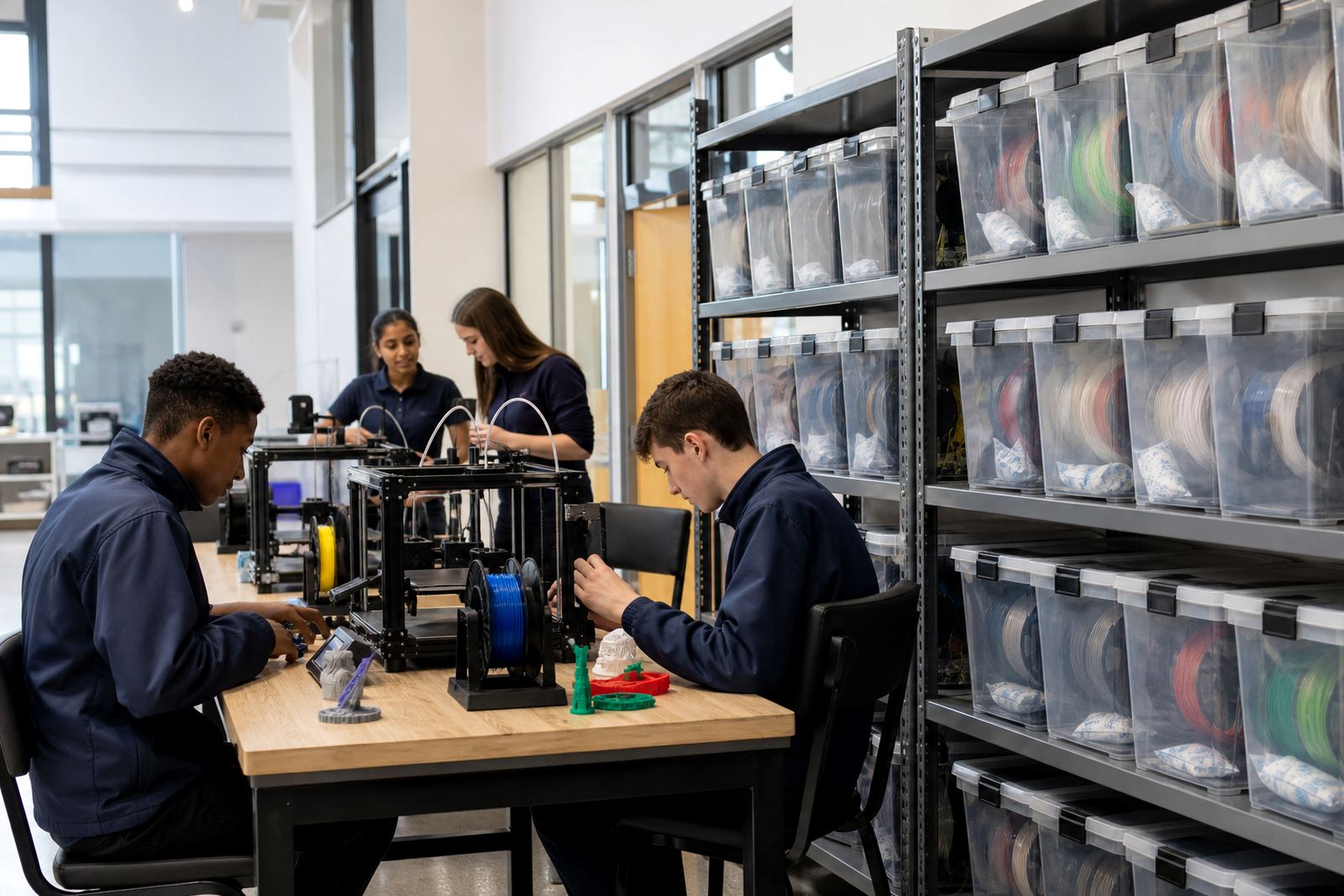
The simplest rule is this: if a spool is not being used, it should be sealed or placed in a closed container. Clear labelling makes it easier for teachers and learners to find the right material without opening every pack. Use labels for material type, colour, purchase date and whether the spool is open or unused.
For shared school use, this small system prevents mix-ups. A learner looking for a 1.75 mm PLA spool should not have to search through unrelated material, and staff should not need to guess what has already been opened. It also helps with stock counts when term reports or procurement checks come around.
- Store spools in sealed bags or lidded tubs when not in use
- Mark each spool clearly with material type and colour
- Separate open stock from sealed stock
- Keep a simple log of what enters and leaves the cupboard
Watch out for moisture in coastal and rainy areas
Many filament materials do not like humidity. If they absorb too much moisture, prints can come out stringy, brittle or noisy at the nozzle, which is not ideal when a class has only one session to finish a project. Schools near the coast, or anywhere with damp storage rooms, need to be extra careful.
If you are in Cape Town during a wet week or in Durban when the air feels heavy, store filament away from windows, damp floors and exterior walls. A dry cupboard in the staff room or a dedicated cabinet in the lab is usually better than a shelf in the corner. For schools with air-conditioned rooms, keep the storage area away from direct cold air flow too, as condensation can form when materials are moved in and out.
- Use airtight tubs or sealed bags with desiccant where possible
- Keep filament off the floor and away from damp walls
- Avoid storing spools near windows or leaking roofs
- Check for signs of brittleness, popping sounds or rough prints
Build a simple handling routine for learners and staff
Storage is not only about where you keep filament, it is also about how people handle it. Learners should return each spool to the same place after use, and staff should avoid leaving loose ends hanging out where they can snag or tangle. Even a short lesson on handling can save a lot of frustration later.
In a school setting, the best routine is usually the one that is easy to follow under pressure. If a class is packing up before the bell, they need a clear step-by-step process that does not take much time. That may include winding the loose end into a clip, wiping dust from the spool edges and checking that the label is still visible before it goes back into storage.
- Unwind filament gently and clip the loose end in place
- Do not leave spools on dusty tables or near snacks
- Keep one learner responsible for returning stock after each session
- Inspect the spool edge for knots or damage before storing it
Rotate stock so older material gets used first
Older filament should generally be used before newer stock, especially in a classroom where supplies may sit for months between projects. A first in, first out system keeps the cupboard moving and reduces the chance of forgotten spools going stiff or gathering dust. It also makes budgeting easier because you can see which materials are actually being used.
This matters in schools that run holiday programmes or term projects with different grades. If a Paarl school buys several colours for one maker project, those spools should not be buried behind a new delivery next term. Keep older stock near the front and group it by material so teachers can choose quickly without opening every container.
Make storage part of lab safety and maintenance
Filament storage fits naturally into basic lab safety. Keep materials away from heat sources, avoid open flames, and do not store spools where they can be crushed by equipment or heavy boxes. If the room has load-shedding interruptions, make sure filament is still packed away neatly after a session rather than left exposed on the workbench until the next day.
A tidy storage area also supports maintenance. When you know what stock you have, it is easier to match the right filament to the right printer settings and lesson plan. That reduces waste, limits confusion and helps staff spot when a material is no longer suitable for class use.
- Keep filament away from heaters, direct sun and electrical heat sources
- Store materials separately from tools and spare parts
- Check the cupboard during weekly room clean-up
- Remove damaged or dusty spools from active classroom use
A practical example from a Western Cape school lab
A school in Stellenbosch running a small printing room can keep things simple with three marked storage tubs: one for sealed stock, one for open stock and one for damaged or uncertain material. Each tub can be labelled by material type and colour. The teacher or lab helper then checks the open tub before every lesson, while the sealed tub stays untouched until needed.
That kind of setup works well when several classes share the same equipment. It keeps the room organised, makes preparation quicker and helps learners see that 3D printing is not just about the machine, it is about planning, care and order. Small habits like these add up, and they make classroom printing far easier to manage term after term.