
What Maker Club Training Covers
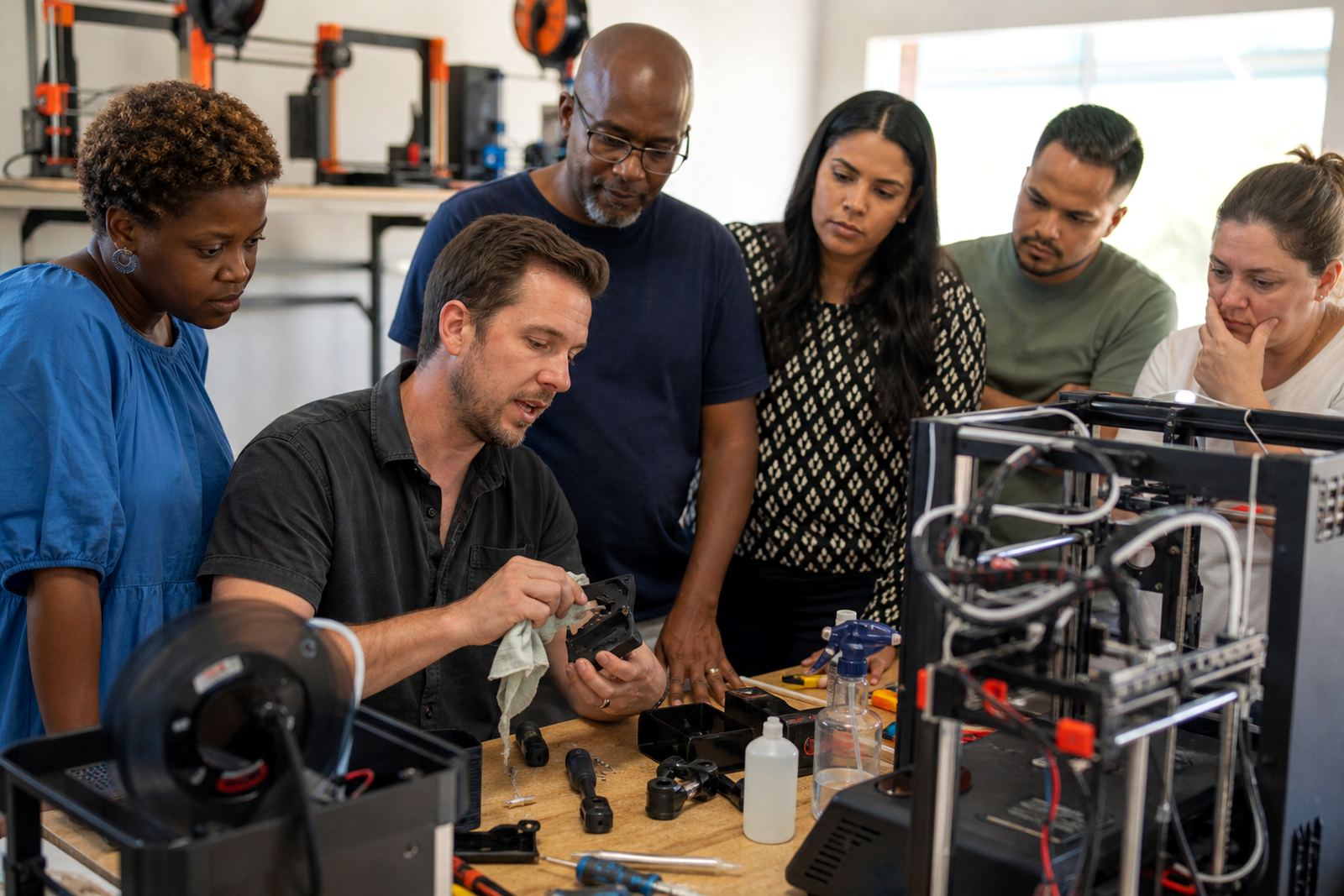
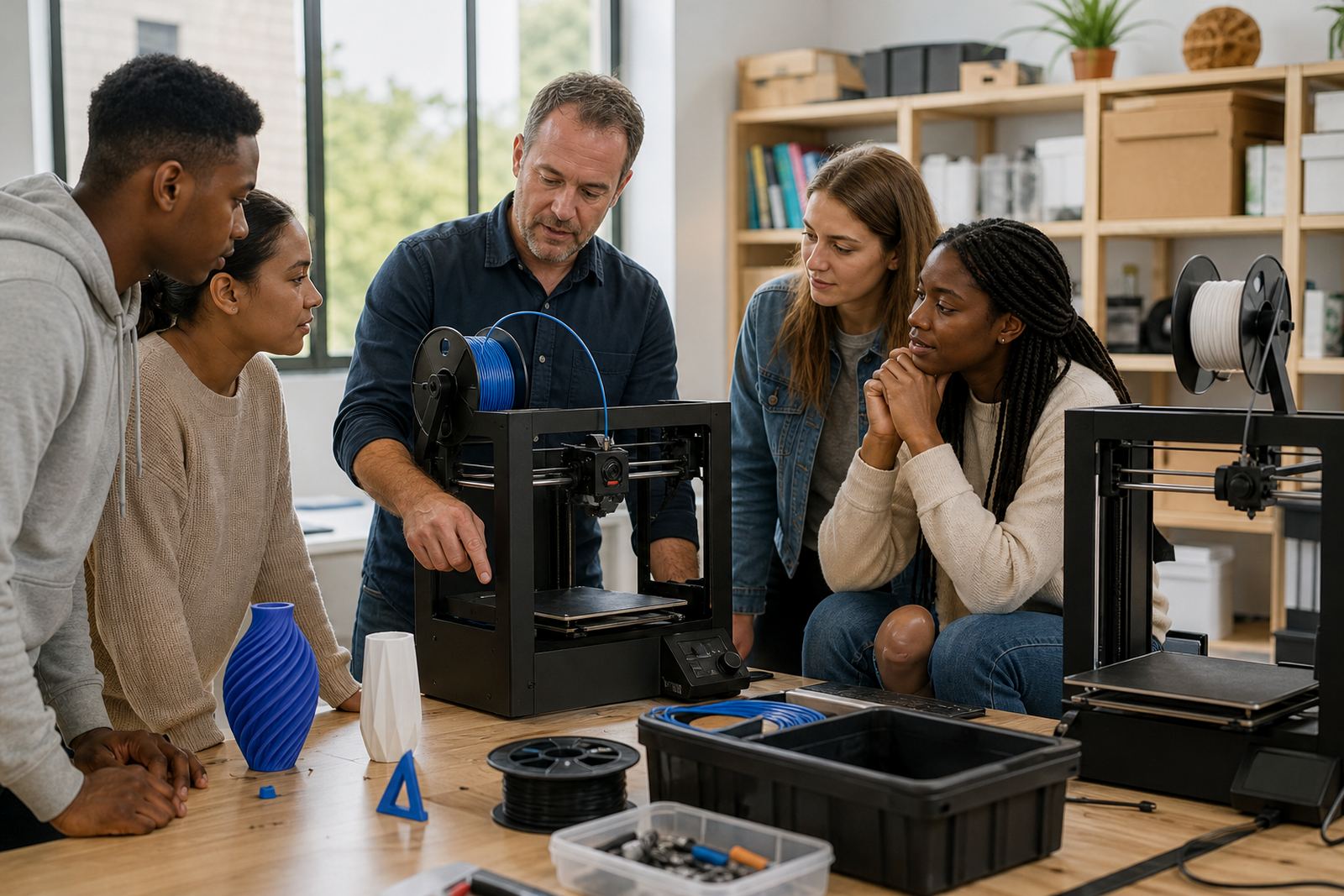
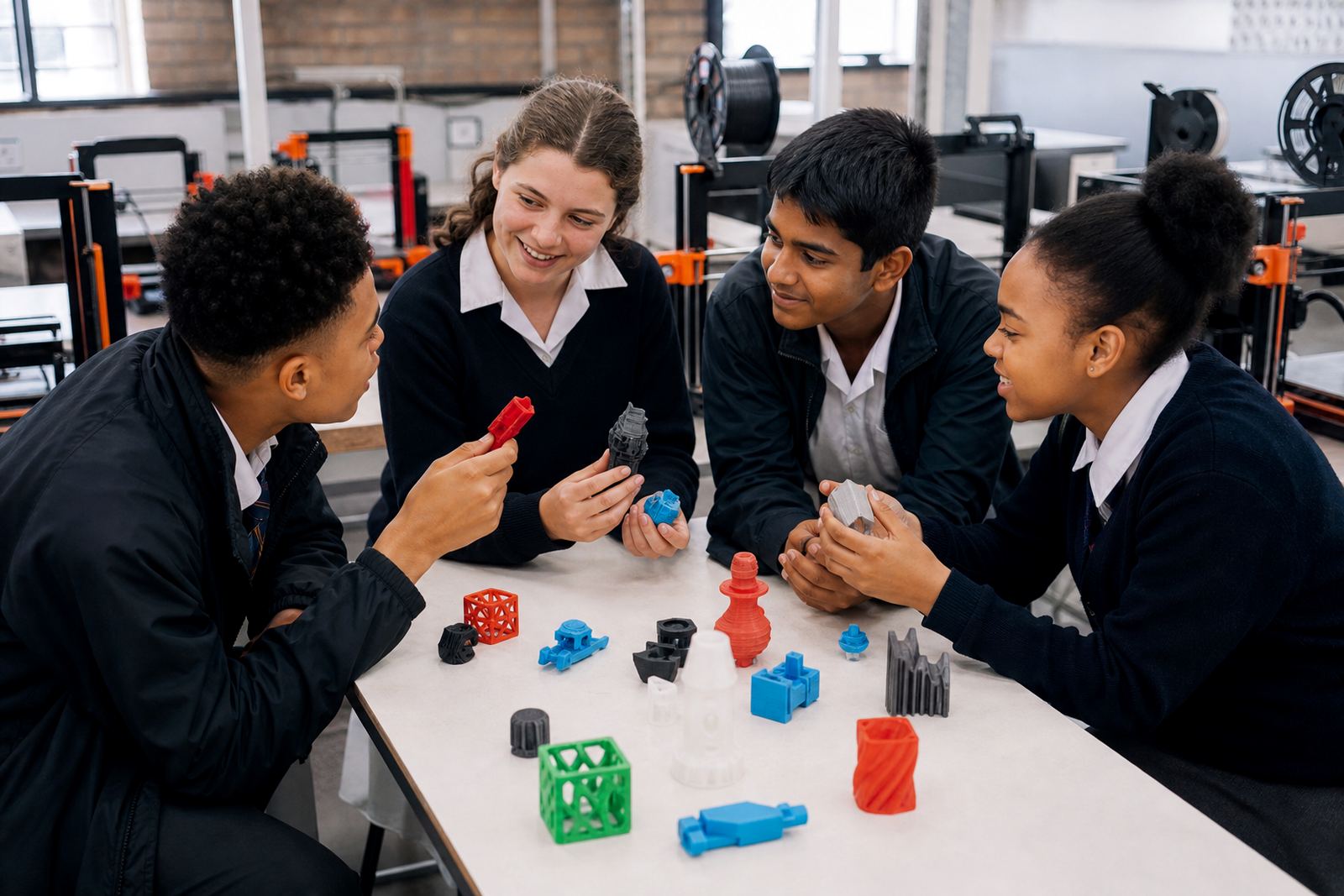
Maker Club Training is set up for after-school clubs, holiday groups and enrichment programmes that want a steady flow of creative work. Sessions focus on designing, preparing and printing small projects that learners can finish in manageable stages, so the group can build confidence week by week. The training is practical and easy to run in a school hall, ICT room or dedicated lab, with guidance for mixed age groups and different skill levels.
We cover classroom routines, file preparation, printer checks and simple troubleshooting so the person leading the club can keep the group active even if there is load-shedding or a short technical snag. If your club works in Stellenbosch, Cape Town, Johannesburg or further afield, the format can be adjusted to suit the space, the timetable and the equipment already on hand.
Typical Session Structure And Outputs
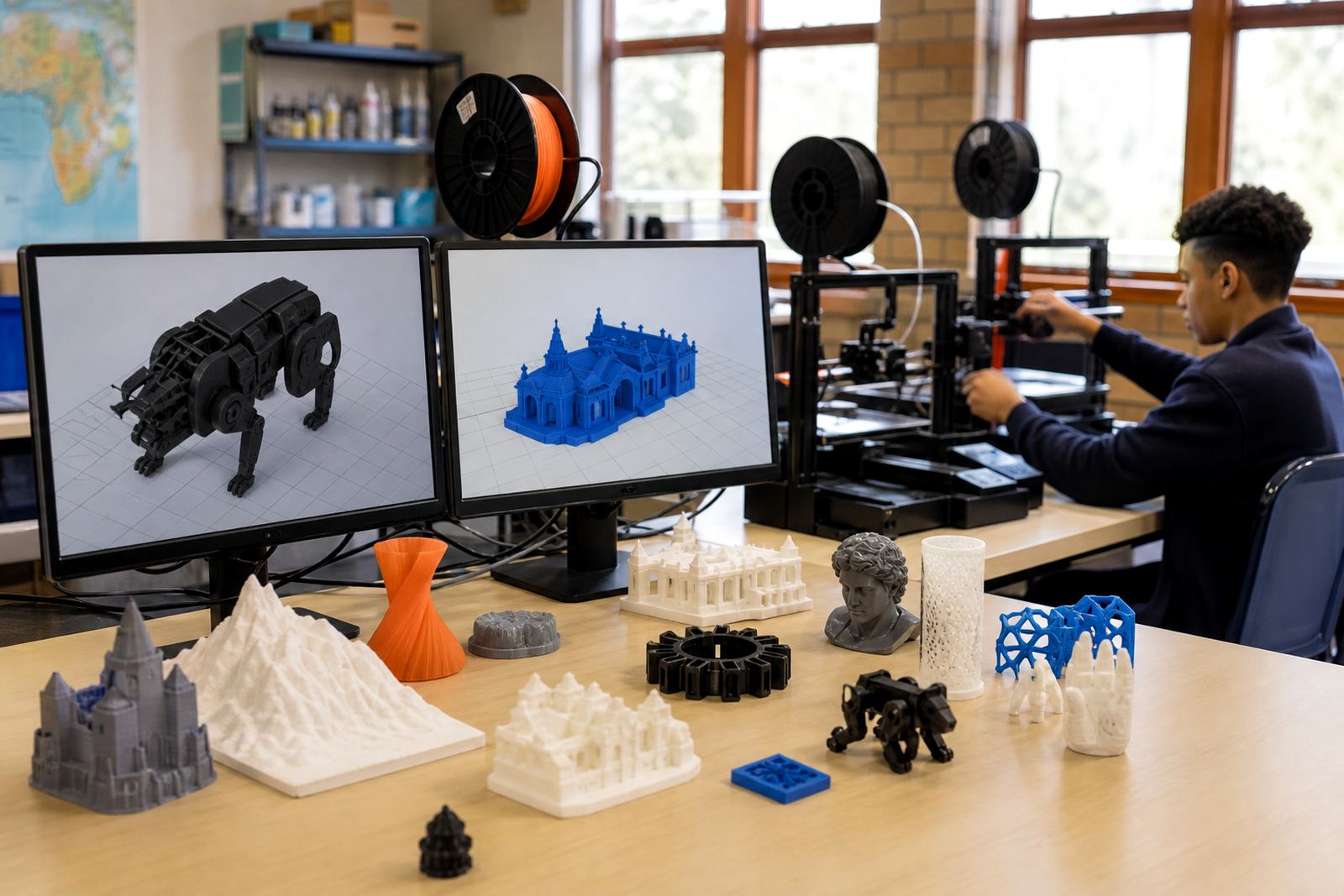
A club programme usually starts with a short briefing, then moves into guided design work and a print run. Depending on the group, learners may sketch an idea, create a simple digital model, prepare it for printing and then inspect the finished item. We keep the process practical so that each session has a clear outcome and the group is not left waiting for too long between steps.
- Intro to the project and the learning goal for that session
- Basic digital design or model adjustment
- Printer setup, bed check and material loading
- Printing, observation and safe part removal
- Simple finishing, labelling and reflection on what worked
Projects can include name tags, classroom tools, small models, badges, holders and other compact items that suit a club environment. Larger items are split into parts where needed, which helps keep turnaround sensible and avoids unnecessary waste.
What Is Included In The Training
The training includes facilitator guidance, classroom workflow planning and equipment familiarisation for the people running the club. We also cover material handling, storage of spools or filament, post-print care and how to keep the work area tidy between sessions. The aim is to help the group run independently after the handover, with support where needed.
Where required, we can include advice on choosing suitable printers for a school setting, arranging a simple workstation and making sure the room supports safe supervision. For schools near the coast, we often mention moisture control for materials because damp filament can affect print quality. In inland towns, dust and heat are more likely to be the issue, so the setup advice changes accordingly.
- Club-friendly lesson flow and activity planning
- Printer care and daily checks
- Material storage guidance
- Basic fault finding and reset steps
- Safe handling around moving parts and hot components
Process, Turnaround And Planning
The usual process starts with an enquiry through the contact form, followed by a short discussion about the learner age group, venue, available equipment and how often the club meets. From there we recommend a format that fits the school day, after-school time or holiday programme. Some groups want a once-off intro, while others need a term plan with regular visits or a training block for staff.
Turnaround depends on how much preparation is needed and whether the school already has printers in place. A small club can often be set up quickly if the room and equipment are ready, while a larger programme may need a little more lead time for planning, materials and layout. We keep communication practical and clear, so the school knows what happens first and what can wait until the next session.
Pricing Approach For Clubs And Enrichment Groups
Pricing is quoted according to the size of the group, the number of sessions, travel requirements and whether the school needs help with setup or ongoing support. If the club already has an established room and working printers, the scope is usually simpler. If the school needs planning, layout advice or a more detailed handover, that is factored into the quote.
We prefer to quote on the real needs of the programme instead of pushing a one-size-fits-all package. That way schools in Paarl, Somerset West, Durban or Gqeberha can compare options properly and budget with confidence. Materials and consumables are discussed up front so there are no surprises once the club is running.
- Quoted to the programme scope and session count
- Adjusted for group size and venue location
- Can include setup help and refresher support
- Materials discussed separately where needed
Maintenance And Follow-Up For Active Clubs
For a club that runs every week, light maintenance should happen before each session and a fuller check is sensible every four to six weeks. That usually includes bed levelling, nozzle checks, belt inspection, fan cleaning and checking that materials are stored dry and neatly labelled. In humid coastal areas this matters even more, because moisture can affect print consistency and cause unnecessary failed jobs.
We also recommend a simple register of prints, faults and consumables used. It helps the facilitator spot repeat problems early and keeps the club organised when learners change over from one term to the next. If the group grows or the printing load increases, we can advise on more frequent servicing or a revised workflow so the room stays manageable.
Our support is practical and steady, not overcomplicated. The goal is to keep the club printing, learning and making useful things without constant stoppages.
Key facts
| Course format | Group-based sessions for clubs, enrichment groups and holiday programmes |
|---|---|
| Ideal group size | Small to medium groups, with flexible staging for larger intakes |
| Typical session length | Short guided blocks or longer workshop periods, depending on timetable |
| Equipment focus | Benchtop 3D printers, slicing software, basic tools and safe workstations |
| Maintenance interval | Quick checks every session, fuller review every 4 to 6 weeks |
| Service areas | Stellenbosch, Cape Town, Johannesburg, Pretoria, Durban, Gqeberha and surrounding towns |