
What the Printer Operations course covers
This course is built around the daily work of running a printer in a school lab or makerspace. We focus on the steps that keep jobs moving: checking the machine, loading filament, setting print files, starting a task, watching the first layer, and spotting problems before a print fails. The aim is simple, learners and staff should know what to do from the first setup to the final part removal.
We also cover the practical side of classroom use in South Africa, including power interruptions, dust, heat and coastal humidity. That means learning how to store filament properly, how to pause work when conditions change, and how to keep records so the next person can pick up with confidence.
- Pre-print checks and safe work area setup
- Loading and changing filament
- Basic slicing settings and file preparation
- Starting, monitoring and stopping a print
- Simple fault spotting and job recovery
How the training session runs
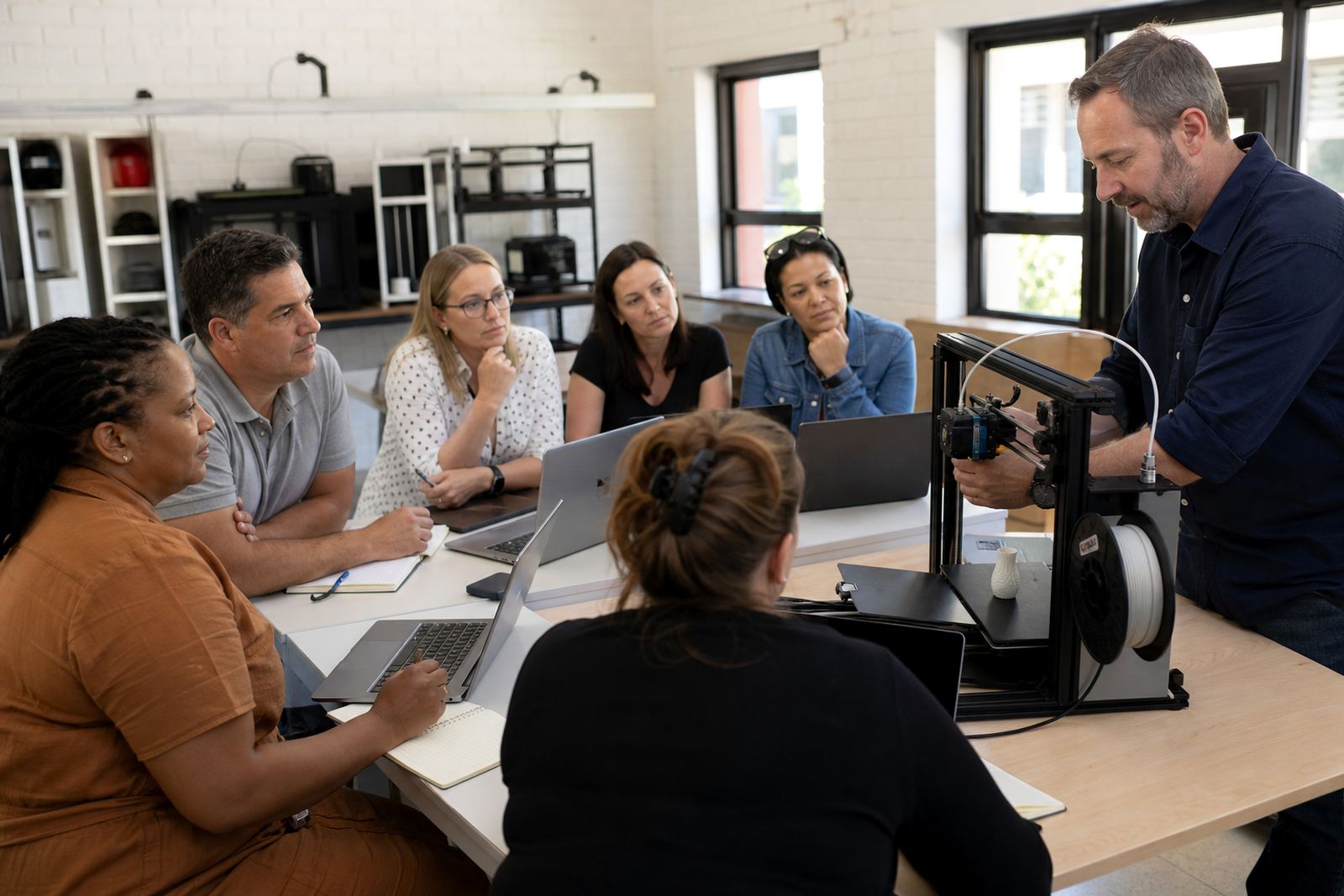
We begin with a short briefing on the printer, the tools, and the rules for the room. After that the group works through a guided demonstration, then each participant practises the steps with supervision. The session is hands-on from the start so that everyone sees how the machine behaves, not just how it is described.
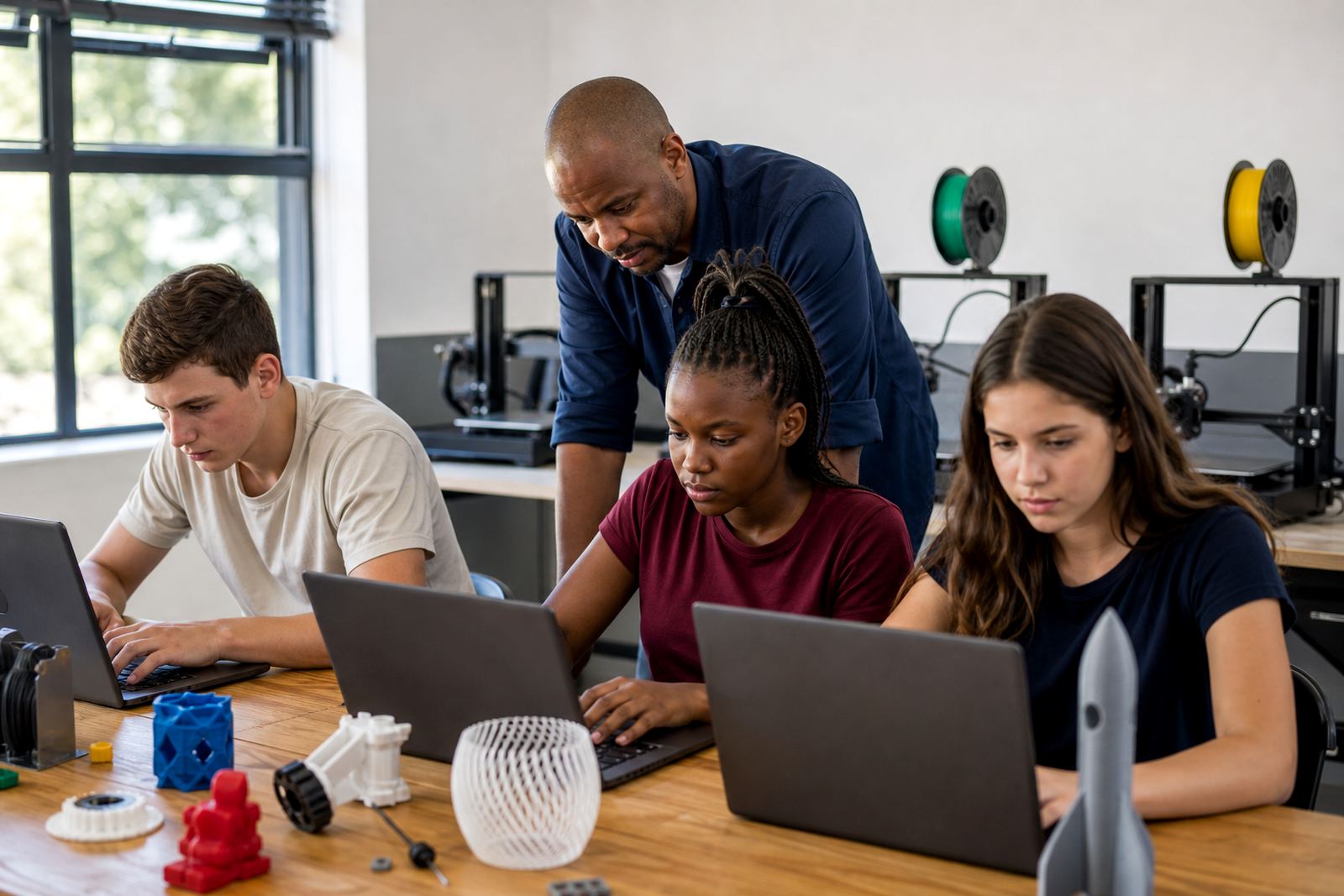
Depending on the group size and the level of experience, the course can be run as a teacher session, learner workshop, or mixed group training. We can also adjust the focus for a school that already has equipment in place and wants better daily operation, or for a new lab that needs a clear operating routine. It is practical work, and we keep the pace steady so no one gets left behind.
- Intro to the printer and workspace rules
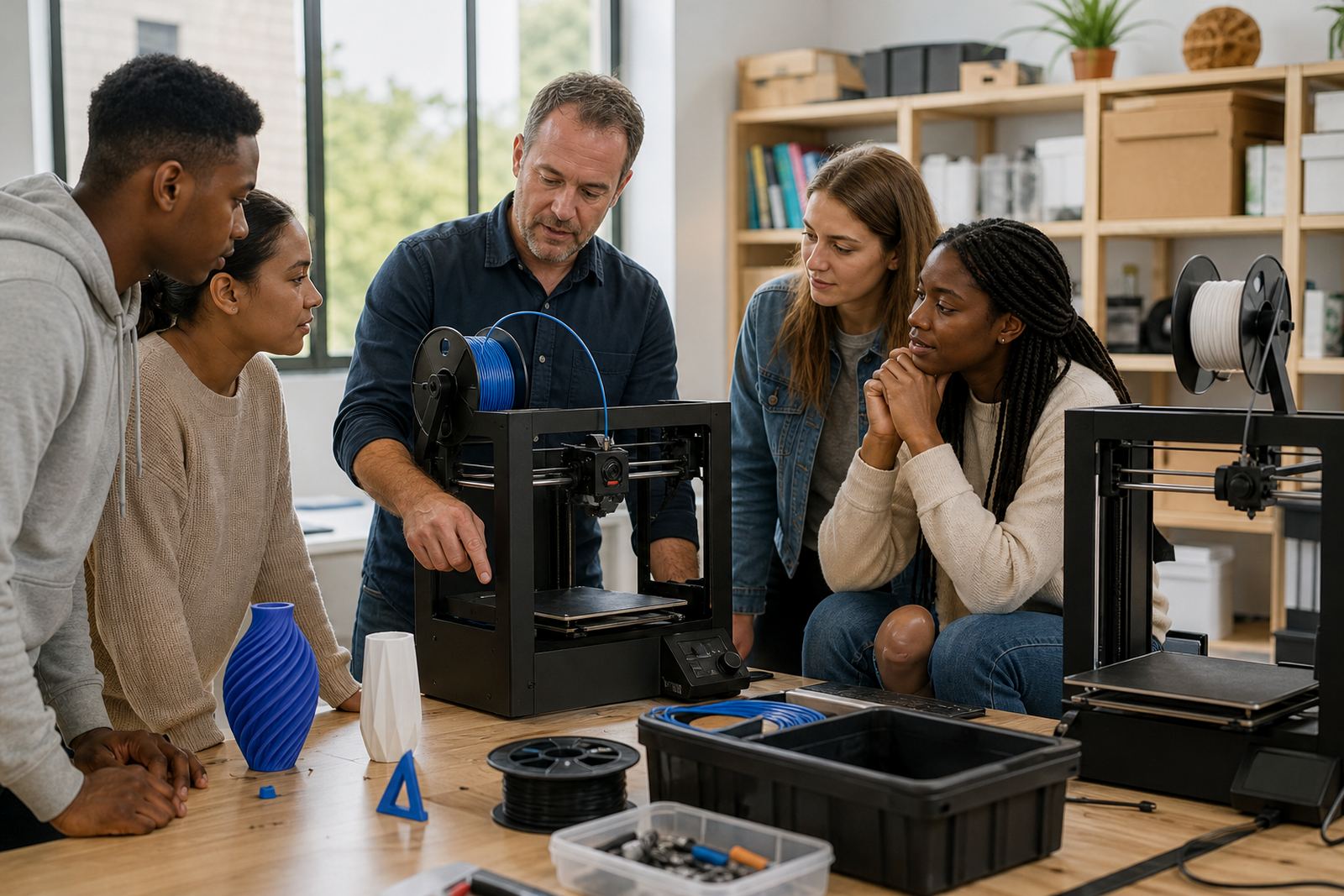
- Demonstration of loading, preheating and starting jobs
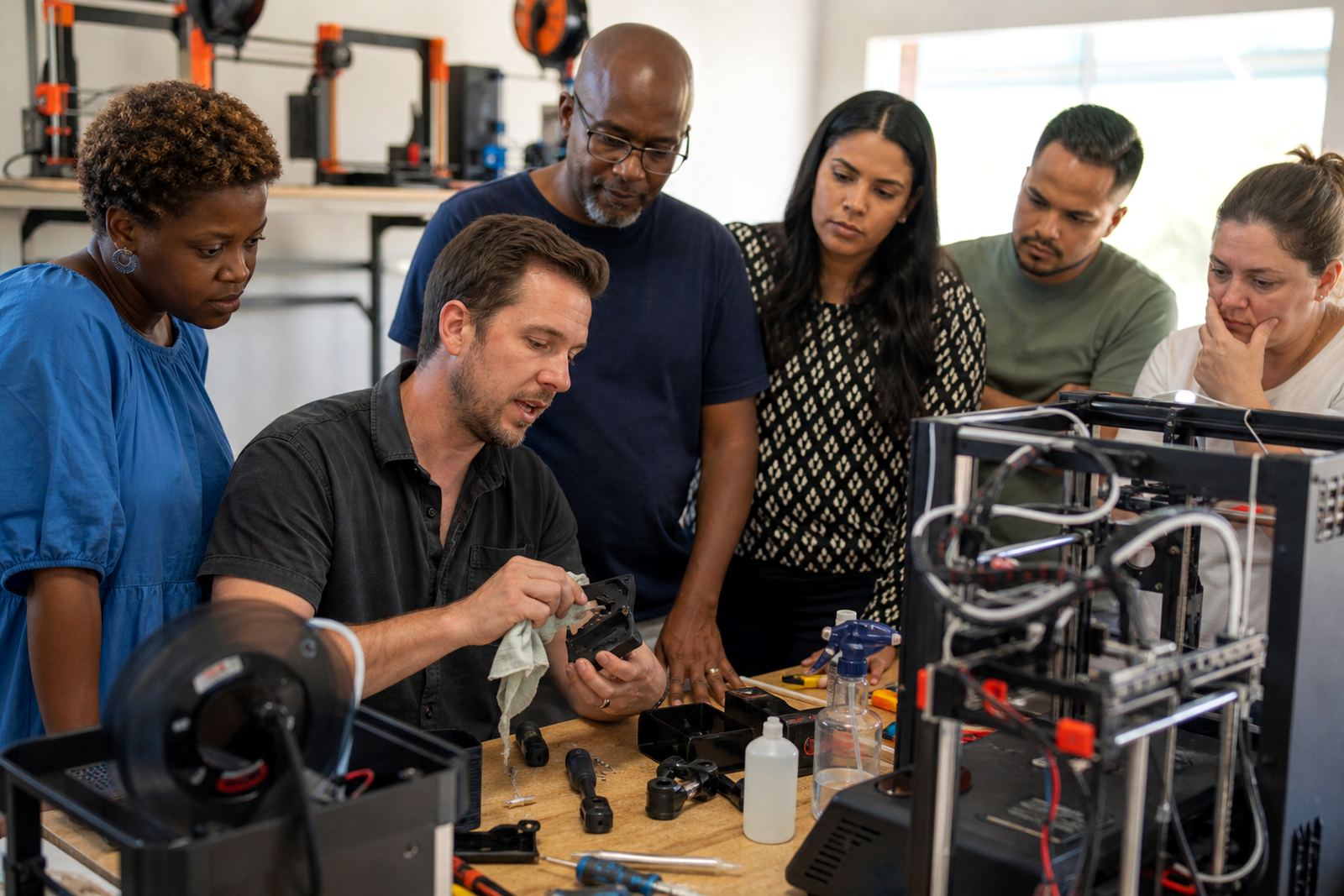
- Hands-on practice with supervision
- Monitoring print quality and first-layer adhesion
- Closing routine and parts handover
What is included in the course
The course includes printed or digital guidance, supervised practical exercises, and a clear operating checklist for classroom use. We also include common troubleshooting points such as blocked nozzles, poor bed adhesion, stringing, and uneven extrusion. If a school needs a more structured format, we can shape the lesson into a timetable that suits periods, aftercare clubs, or holiday sessions.
For schools in Stellenbosch, Cape Town, Paarl, Somerset West and further afield, the approach stays the same: keep it manageable, safe, and repeatable. The point is not to overwhelm staff with theory, but to build confidence with the actual machine and the workflow around it.
- Operating checklist for daily use
- Basic troubleshooting guide
- Supervised print task practice
- Cleaning and shutdown routine
- Classroom safety reminders for hot surfaces, moving parts and small tools
Printer specs we work with
Printer Operations is suitable for common classroom printer types used in schools and training spaces. We work with entry-level and mid-range FDM printers, especially units with a heated bed, removable build surface, and standard filament loading. Where a school has more than one machine, we can standardise the routine so each printer is used in the same way. That saves time when staff rotate, and it makes maintenance a lot easier.
We also discuss the practical specs that matter in a school environment: build volume, nozzle size, filament diameter, print speed, layer height, noise level, and the available space around the machine. A small lab in a tight room needs a different setup from a larger training space, so the course stays grounded in the equipment on site.
Turnaround and planning for schools
Turnaround depends on the number of participants, the equipment on site, and whether the session is part of a wider rollout. A single session can often be arranged quickly, while multi-group training needs a bit more planning so the right staff are available and the machines are ready. We work with schools across South Africa, including Cape Town, Johannesburg, Pretoria, Durban and Gqeberha, and we plan around term dates where possible.
When a school books Printer Operations, we first confirm the room, printer model, filament type, and the level of support needed. After that we set the session flow and share any preparation notes. If the lab will be used during school hours, we also factor in movement between classes, storage of tools, and end-of-day shutdown so the equipment stays in order.
Pricing approach and maintenance intervals
Pricing is based on the session format, travel, group size and whether the training is for one school or several sites. We keep it straightforward. A basic session is quoted according to the time needed in the room, while a larger rollout is priced as a project with the work broken into clear parts. Schools can also combine Printer Operations with Maintenance Basics or Lab Setup Course where that makes sense.
For maintenance, we recommend a light daily check before each print, a weekly clean-down of the build area and exterior surfaces, and a more thorough inspection at regular intervals depending on use. Nozzle wear, bed condition and filament path checks should not be left too long, especially in busy labs where the machine runs often. In coastal areas like Gqeberha and Durban, humidity can affect filament storage, so the routine should include dry storage and sealed containers. Small habits prevent big stoppages, and that keeps learners printing instead of waiting.
- Daily: quick visual check, bed clean and filament inspection
- Weekly: dust removal, axis check and surface review
- Monthly: deeper inspection of nozzle, belts and feed path
- As needed: recalibration after transport, outage or repeated failure
Key facts
| Course format | Hands-on training in supervised learning spaces |
|---|---|
| Suitable for | Teachers, learners, lab supervisors and club facilitators |
| Typical focus | Loading, monitoring, safe operation and basic fault spotting |
| Printer types | Common FDM classroom printers with standard filament |
| Location coverage | Stellenbosch base, with training across South Africa |
| Maintenance guidance | Daily, weekly and monthly checks for classroom use |