What the Engineering Basics Pack includes
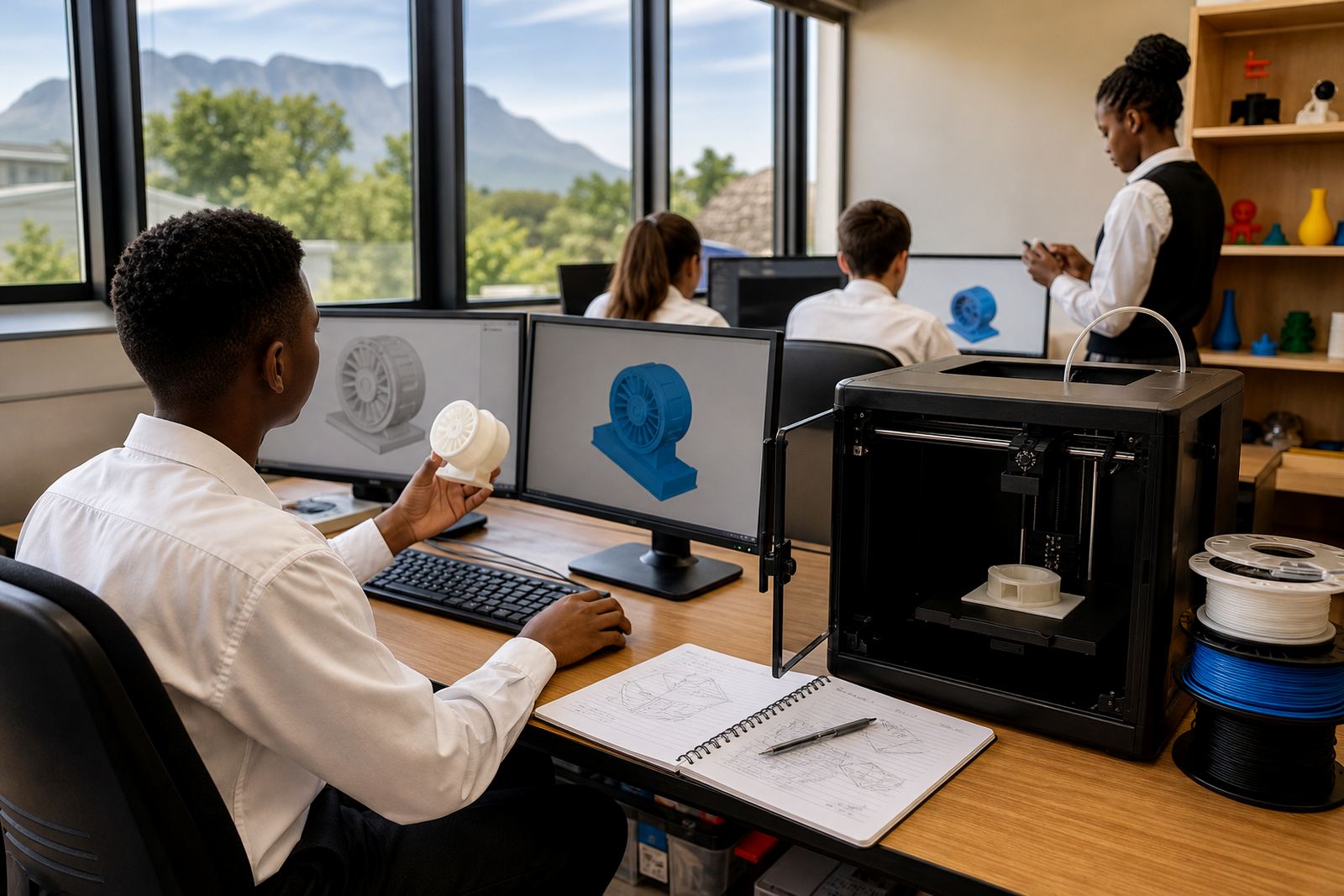
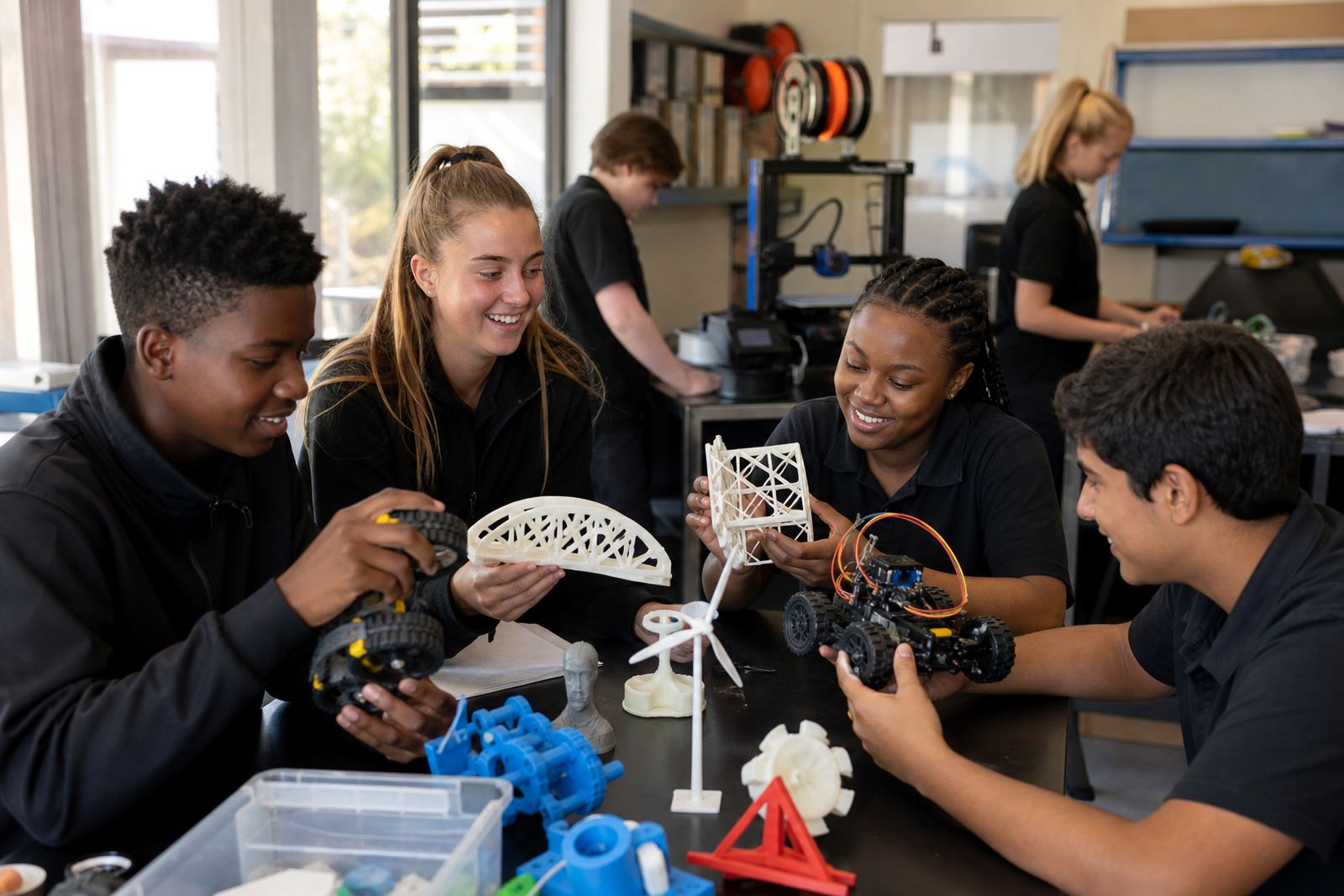
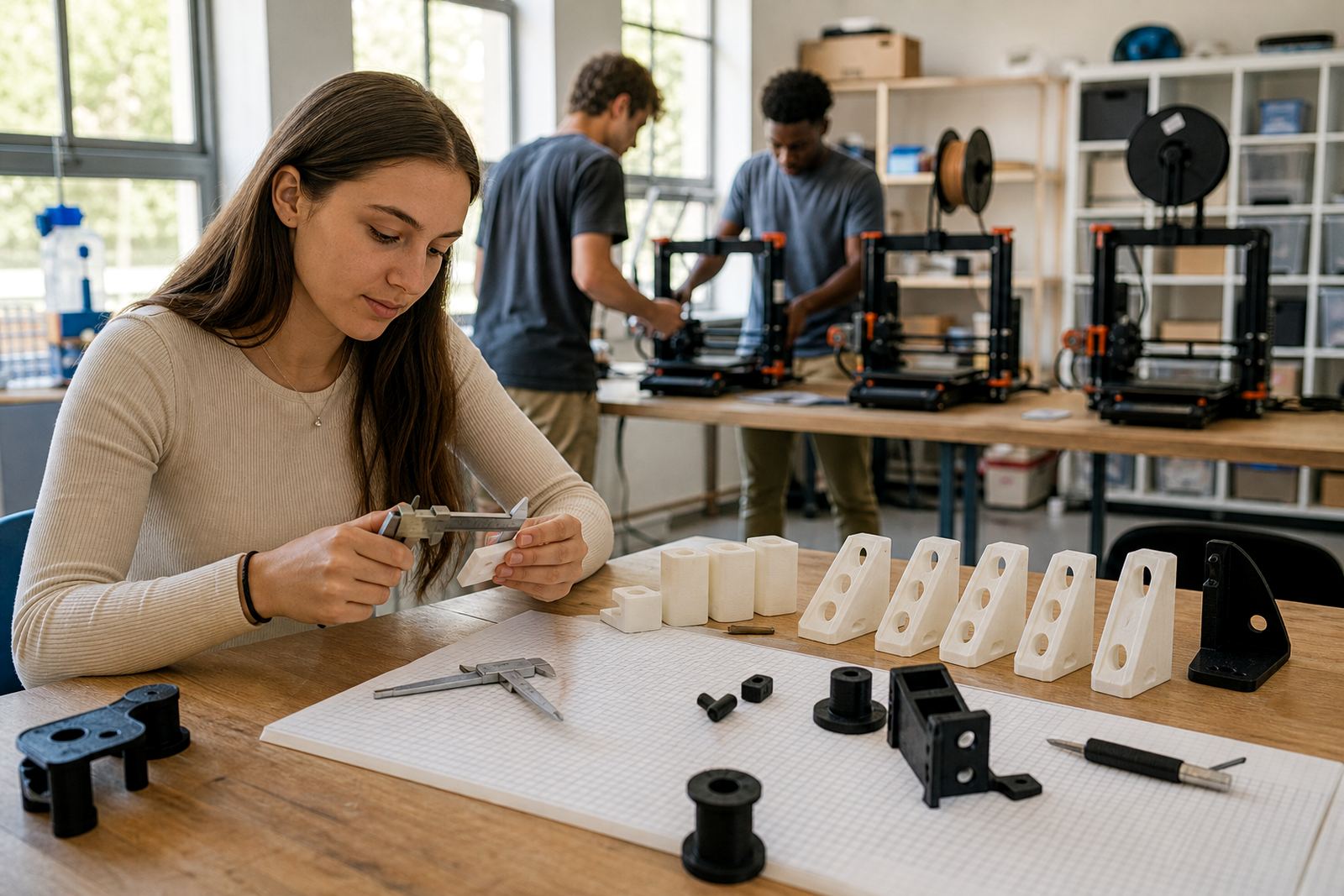
This package is set up as a classroom starter pack for early engineering thinking. It gives teachers a structured way to explore shapes, joints, tolerance, movement and basic load ideas using printed parts, sample components and guided classroom activities. The focus is on understanding how parts meet, how fit changes with size and how small design changes affect function.
It suits schools that want learners to move from drawing and discussion into practical testing. The pack can be used in technology lessons, maker clubs, holiday programmes and introductory STEM activities. It is also useful for schools that already have a 3D printer and want more classroom structure around it.
- Introductory shape and function exercises
- Fit testing with basic mechanical parts
- Simple classroom build tasks and repair ideas
- Teacher guidance for supervised use
- Suitable for group work and pair work
Sizes, pack options and classroom use
The Engineering Basics Pack is supplied in school-friendly options so you can choose a layout that matches your class size and the time available. A single class set works well for one teacher and one room, while a larger multi-set option suits departments running several groups across a term. Schools in Stellenbosch, Cape Town, Paarl and Somerset West often use the pack for smaller practical lessons, while larger schools in Johannesburg, Pretoria, Durban and Gqeberha usually prefer a fuller set for rota use.
The content can be adapted for junior and intermediate learners, and also for older learners who need a revision activity before moving into CAD or printer work. It is not tied to one subject only, so it can support technology, natural sciences and extra-curricular maker activities. Some schools use it as a short module, others spread it over several lessons.
- Single classroom set for one group
- Multi-group set for rotation across periods
- Teacher-led intro pack with guided activities
- Workshop-ready option for clubs and holiday programmes
- Can be paired with CAD Basics or Printer Operations
Where the pack suits best in South African schools
This pack is suited to schools that want practical learning without complicated setup. It works well in normal classrooms, science rooms and technology rooms, provided there is enough table space for sorting parts and doing fit tests. Because it is designed for learning by handling and comparing parts, it is useful in both low-tech and printer-equipped schools.
It is a strong fit for schools dealing with load-shedding, because the activities can still continue even when printers are not running. Learners can measure, sort, test and assemble parts without needing constant power. In coastal towns such as Gqeberha and Durban, it is also sensible to store the parts in a dry cupboard or lidded box to keep moisture and dust down. In inland areas like Pretoria and Johannesburg, the main concern is safe handling and keeping small items together between periods.
The pack also suits after-school maker clubs and holiday programmes where the aim is to keep learners busy with practical tasks. It gives a teacher a clear way to move a group through a lesson without needing advanced equipment in every session.
Installation, power and room needs
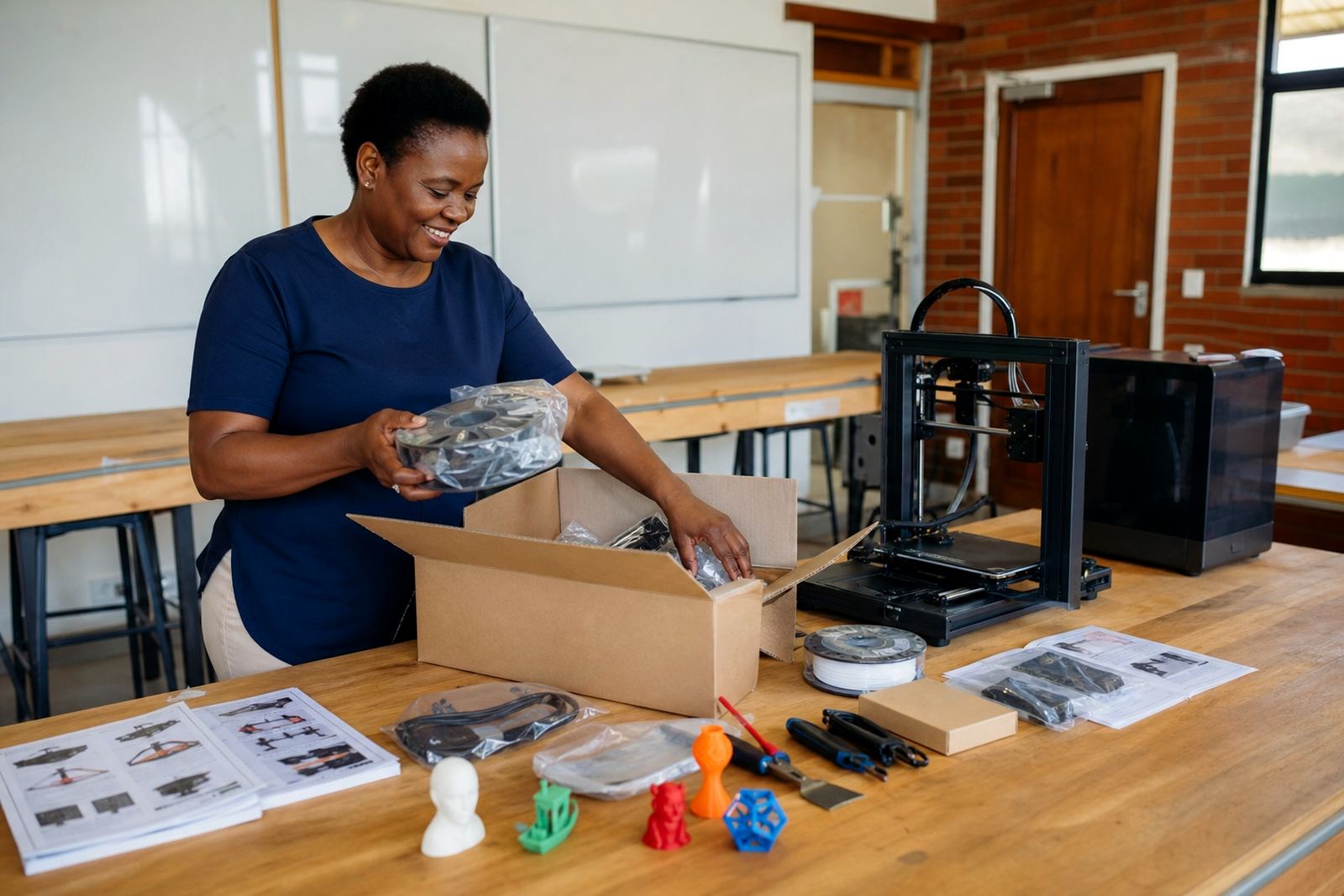
There is no heavy installation needed for the Engineering Basics Pack. Schools only need a flat work surface, a storage container and enough space for learners to handle parts safely. If the pack is used alongside a printer, then the printer itself should be placed on a stable table with easy access to a socket and enough clearance around vents and moving parts.
A standard classroom plug point is usually enough for any related printer activity, but the pack itself does not require gas or special extraction. If a school is combining the pack with printing, the room should be well ventilated and kept free of clutter. Cables should be routed away from walkways, and learners should not stand too close to moving parts while equipment is operating.
- Flat table or bench space for group work
- Dry storage for parts and samples
- Normal mains power if used with a printer
- No gas line or special utility requirement
- Adult supervision for classroom demonstrations
Care, servicing and classroom safety
Care is straightforward. Keep all parts sorted, check for wear on any moving pieces and return items to the labelled storage tray or box after use. If the pack includes printed samples, avoid leaving them in direct sun on a windowsill, as heat can cause warping over time. In humid areas it helps to keep the kit closed when not in use, because moisture can affect finish and long-term condition.
Basic servicing is mostly about classroom discipline and stock control. Count parts before and after lessons, replace any damaged samples and keep a note of what gets lost most often. That makes it easier to order the right spares later. For teacher safety, keep hot equipment, if present, under supervision only and make sure learners know not to touch moving nozzles or heated surfaces. Small parts should be handled carefully so nothing gets swallowed or used in ways they shouldnt be.
- Store in a cool dry room when possible
- Keep small components counted and labelled
- Wipe dust off samples with a soft cloth
- Use only under teacher supervision
- Separate printed samples from food and drinks
What to check before placing an order
Before ordering, it helps to decide how many learners will use the pack, whether it is for one subject or several, and whether the school already has a printer or needs one later. It is also worth checking whether the room has enough storage for the parts between lessons and whether the teacher wants a short intro lesson or a more complete activity set. Those details shape the final supply list and help avoid missing items.
When schools enquire, they should also confirm the age group, the number of class groups, and whether the pack will be used for regular lessons or occasional workshops. If the school is planning to pair it with a printer, make sure there is a plan for power access, safe supervision and routine cleaning. That bit of planning saves time later and keeps the classroom running smoothly.
- Class size and number of groups
- Age level of learners
- Whether a printer is already in place
- Storage space and room layout
- Preferred use: lessons, clubs or holiday programme
Key facts
| Product type | School engineering starter pack |
|---|---|
| Primary use | Shape function, fit testing and simple mechanical thinking |
| Recommended setting | Technology rooms, science rooms, maker clubs and holiday programmes |
| Power need | None for the pack itself; standard mains power only if used with a printer |
| Gas need | None |
| Care | Dry storage, part counting, supervised use and basic cleaning |