
What the High School Kit is built for
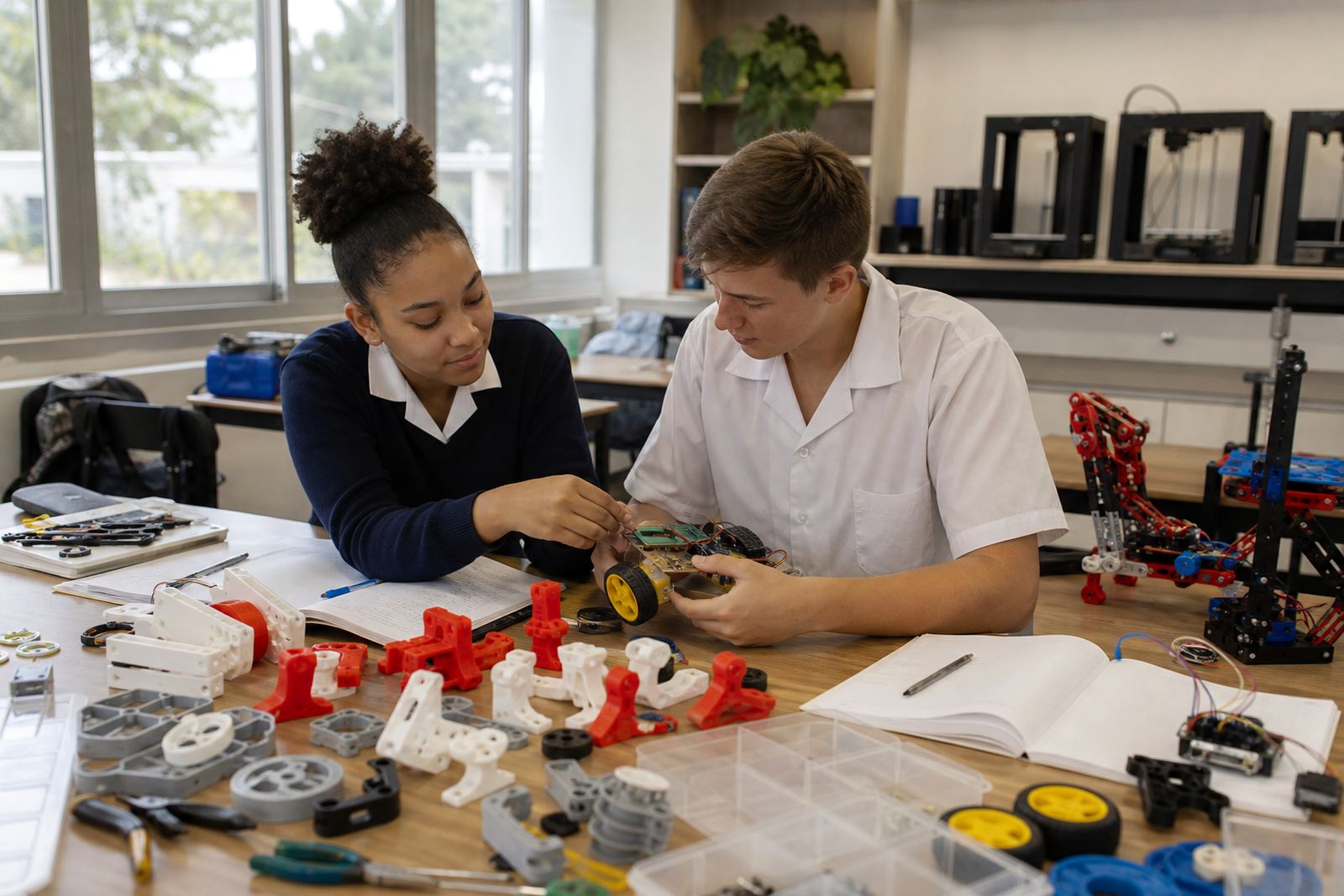
This kit is intended for Grades 8 to 12 learning spaces where learners need more than a basic demo unit. It supports design thinking, measuring, modelling, slicing and print finishing, so teachers can move from simple classroom activities to longer projects with clearer outcomes.
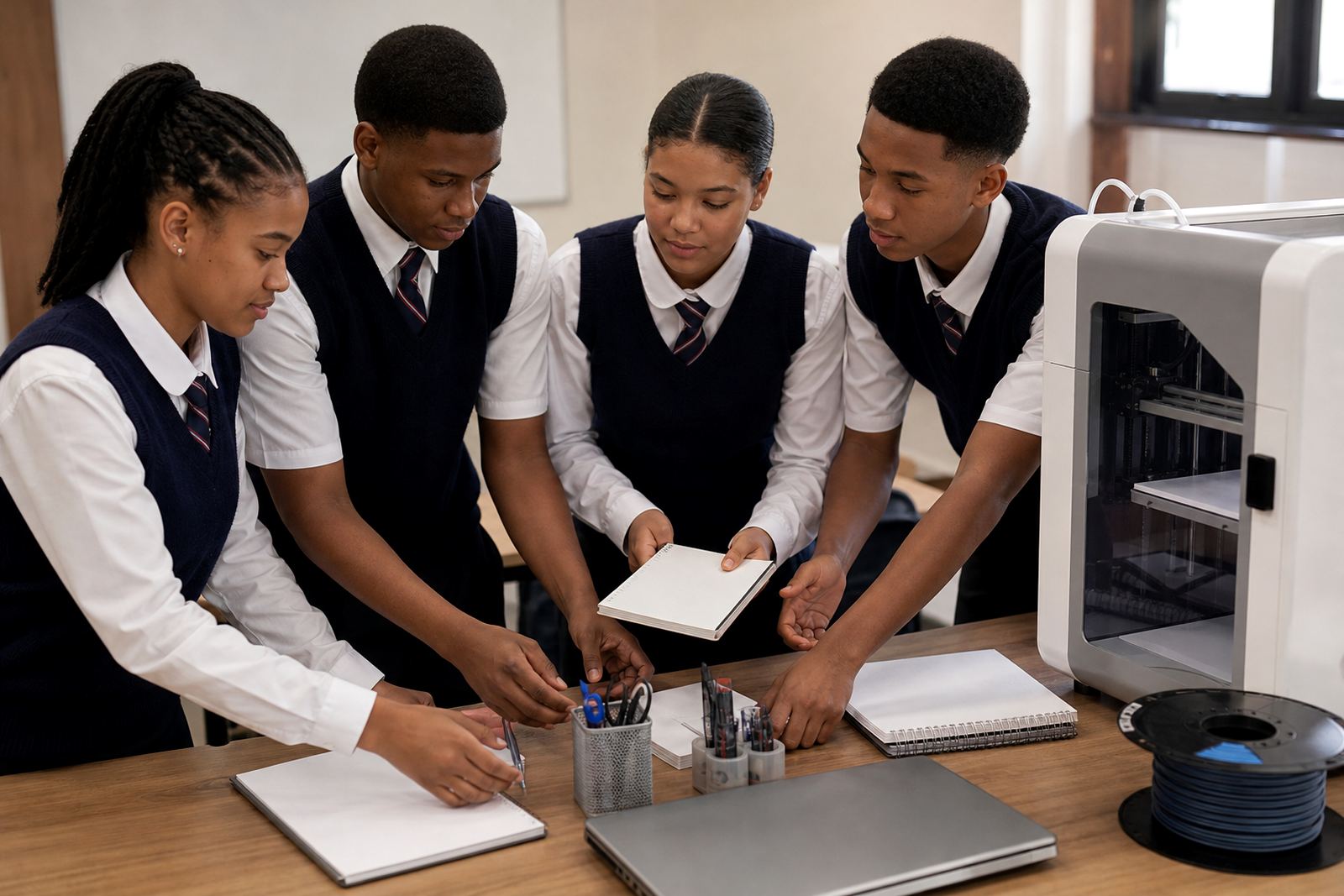
Schools often use this setup for technology, art and design, CAT support activities, STEM clubs and maker spaces. It works well where learners share equipment in groups and where the school needs a more organised way to manage printing, filament and tools.
- Suitable for beginner to intermediate classroom use
- Good for project work, prototypes and learner portfolios
- Designed for supervised school use rather than open public access
Standard school kit components and options
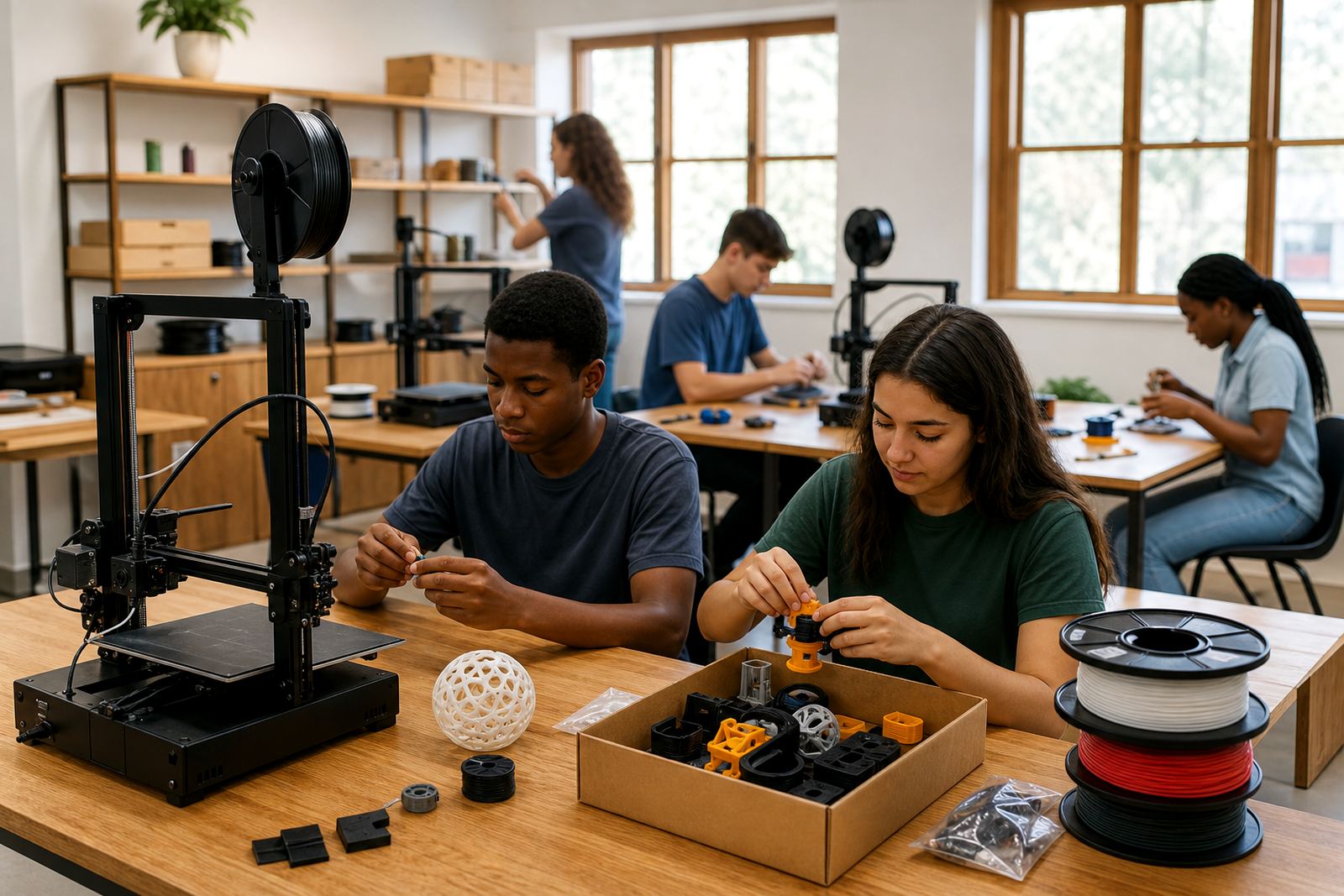
The High School Kit is supplied as a practical classroom bundle. Exact contents can be adjusted to suit the number of learners, the available room, and whether the school wants a single station or a small shared lab. A typical setup includes benchtop 3D printers, starter filament, basic tools, safety items and the software workflow needed to get learners printing in a controlled way.
Options are usually chosen around class size and the type of work the school wants to do. Some schools need a compact 2-printer setup for a small lab, while others prefer a larger multi-printer arrangement for rotating learner groups. We can also include storage and consumables planning so the school is not left short halfway through the term.
- Single printer, twin printer or multi-printer options
- Starter filament packs in common classroom colours
- Basic finishing tools, removal tools and maintenance items
- Storage and lockable cabinet options for shared rooms
Where this kit suits best
This setup suits mainstream high schools, technical schools, private schools and after-school clubs that want a practical technology room. It is also a strong fit for schools running inter-house projects, robotics support work or enrichment programmes where learners must work in a way that is hands-on but still organised.
In coastal areas such as Cape Town, Gqeberha and Durban, the room should be kept dry and well ventilated because humidity can affect filament storage and print consistency. In hotter inland areas like Johannesburg and Pretoria, stable power and a clean, dust-free room are just as important. If the school has load-shedding to plan around, a backup power strategy should be included before rollout.
- Best for schools with a dedicated tech room or lab corner
- Works in urban and suburban schools across South Africa
- Useful where learners need practical output rather than theory alone
Space, power and room setup needs
Most schools do not need a large room, but they do need the right layout. A firm table, safe cable routing, a clean surface and enough space around each printer are more important than fancy fittings. The room should also have basic ventilation, because printers and post-processing tools are best used in a well aired space.
For power, a standard school supply is usually enough for a small to medium classroom setup, but the exact requirement depends on how many printers run at once and whether there is a computer, lighting and a backup system on the same circuit. In areas with regular outages, schools should plan for inverter, UPS or generator support where needed. No gas supply is required for the printers themselves.
- Requires a stable electrical supply and safe plug points
- No gas connection needed for standard 3D printing use
- Needs a clean, level work surface and secure storage
- Allow space for printing, cooling and learner movement
Care, servicing and everyday classroom use
A school kit works best when the room follows a simple routine. Printers should be cleaned regularly, nozzles checked, build plates kept in good condition and filament stored properly between sessions. Teachers should also keep learners away from hot parts while the machine is running and make sure only supervised groups handle the equipment.
Routine servicing helps reduce failed prints and keeps the room productive. This includes checking belts, fans, beds and firmware settings where relevant, plus replacing worn consumables before they become a problem. If the school uses the kit daily, a short weekly maintenance slot is usually better than waiting for something to stop working.
- Store filament in sealed containers where possible
- Keep dust, moisture and food away from the printers
- Check moving parts, nozzles and beds on a regular schedule
- Use supervision for heated parts and sharp tools
What to check before ordering
Before a school places an order, it helps to confirm the room size, the number of learners, the level of teacher experience and the type of projects planned. A kit for a single class is not the same as a kit for a shared resource centre, so the best result comes from matching the equipment to the actual timetable and room use.
Schools should also check who will manage the room day to day, where materials will be stored, and whether the school wants training included with the kit. If the school has limited time for setup, it is worth confirming the delivery plan, installation support and any extra items needed for power, ventilation or secure storage.
- Class size and number of printing stations needed
- Teacher confidence with design and printer use
- Available room size, power points and storage
- Whether installation, onboarding and follow-up support are required
Key facts
| Intended use | Secondary school 3D printing for design, prototyping and practical learning |
|---|---|
| Typical layout | Single station, twin station or small multi-printer classroom setup |
| Power requirement | Standard single-phase school power, with backup planning recommended where load-shedding applies |
| Room needs | Level table space, ventilation, secure storage and supervised access |
| Consumables | PLA and similar classroom-grade filament, plus basic tools and spare parts |
| Support | Setup guidance, training options, maintenance basics and lab planning support |