
What the Holiday Workshop Kit includes
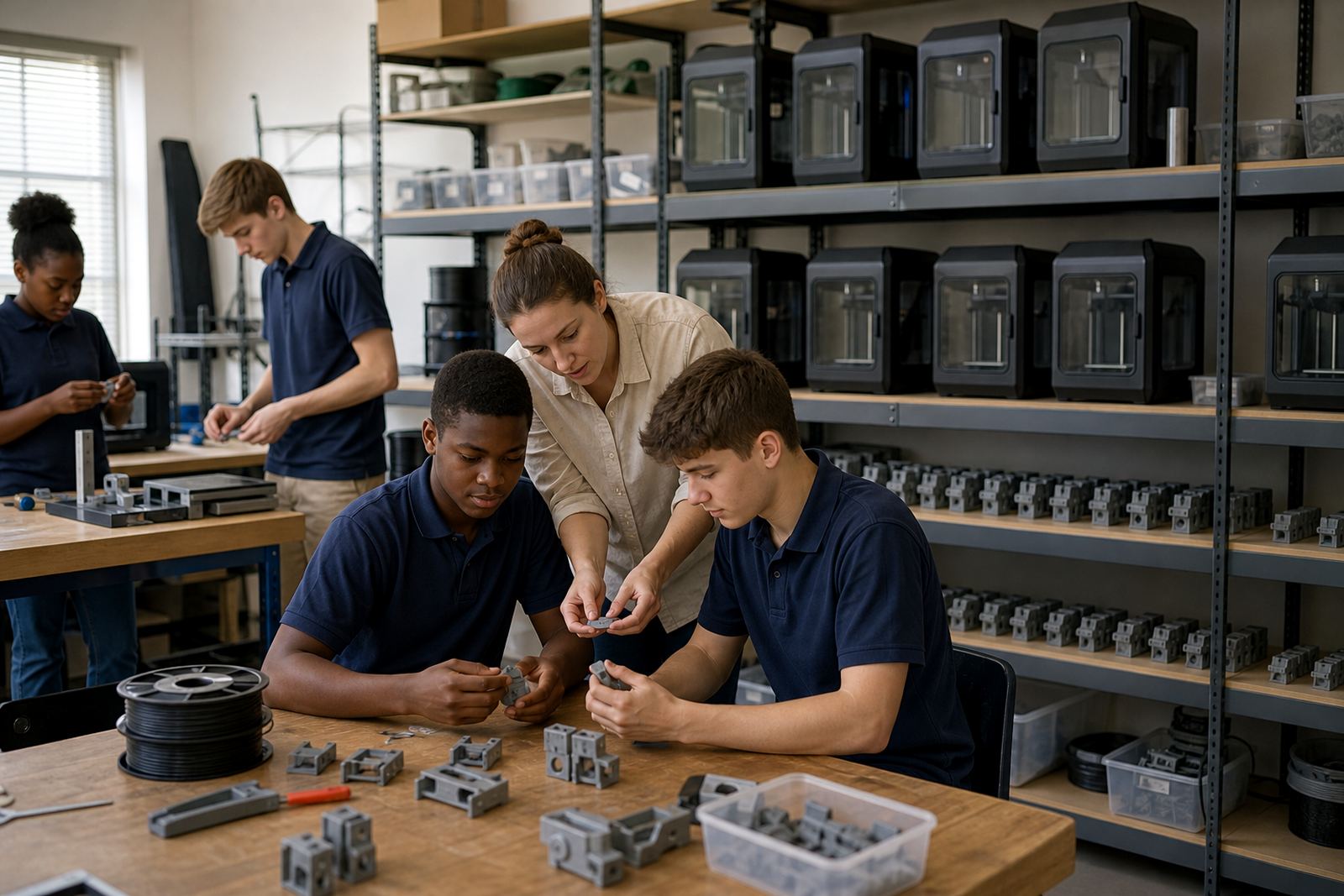
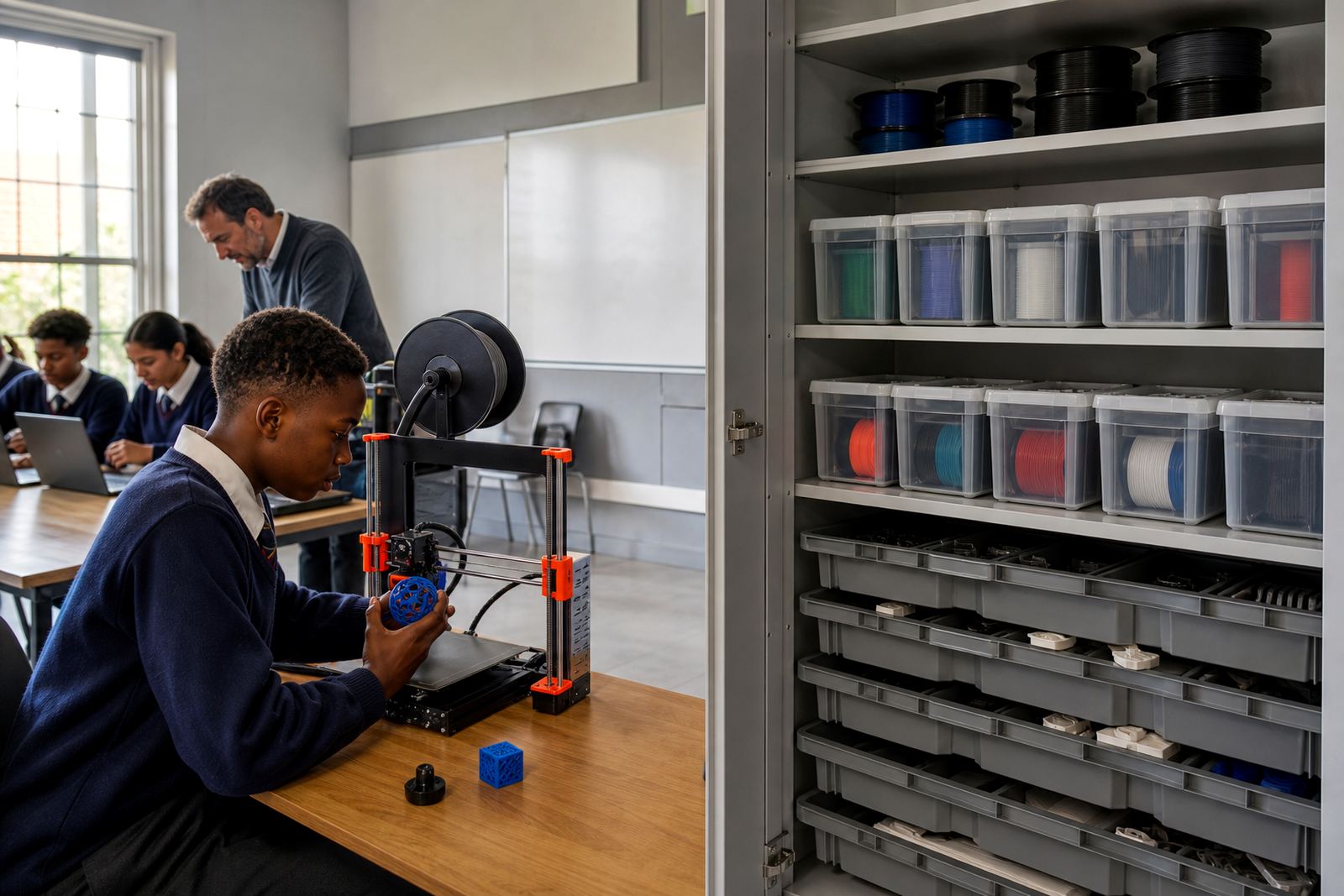
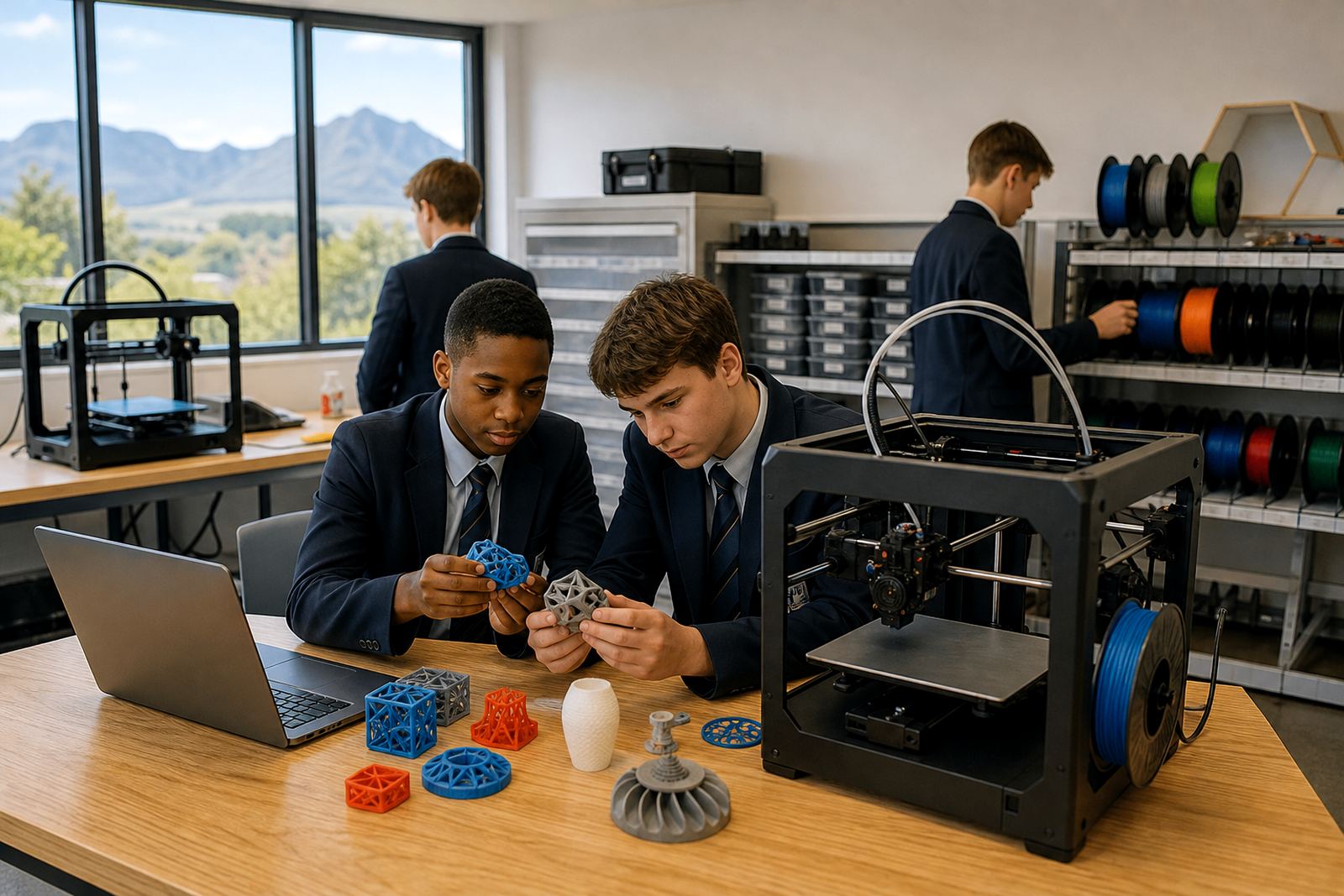
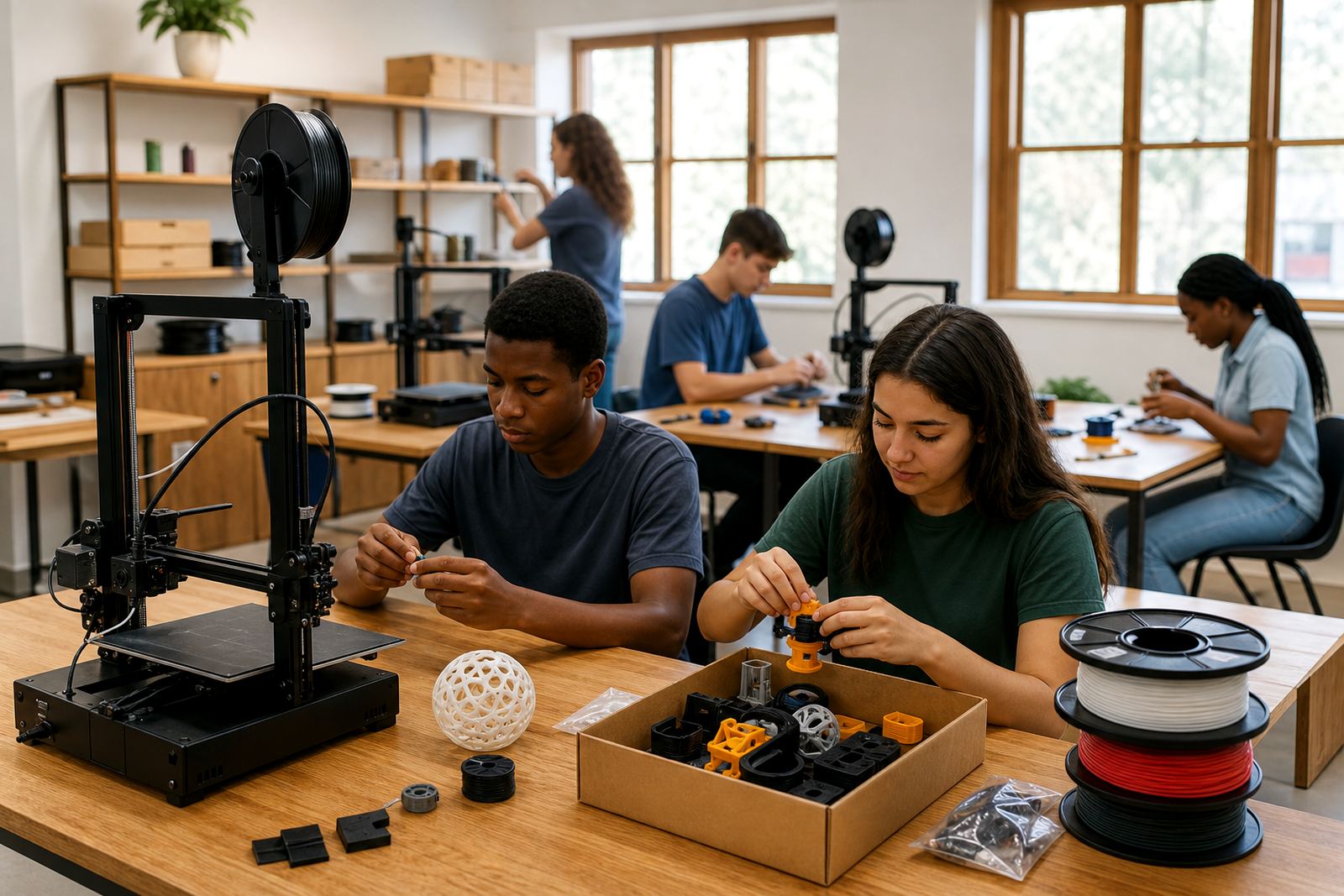
The Holiday Workshop Kit is built for short-format use in schools, libraries, community spaces and holiday programme venues. It brings together a classroom-ready mix of compact 3D printers, starter tools, filament, print removal items, sample models and safety accessories so learners can begin with simple design and printing tasks straight away.
The kit is supplied as a temporary-use package, which makes it suitable for a few days, a week, or a holiday block where equipment needs to be set up, used and packed away again. That makes it practical for Stellenbosch schools as well as venues in Cape Town, Somerset West, Paarl, Johannesburg, Pretoria, Durban and Gqeberha. It is also a sensible option for schools that want to test interest before planning a longer term 3D-printing room. The emphasis is on hands-on learning, clear supervision and easy transport.
- Compact printers for guided group use
- Starter filament for introductory projects
- Basic tools for cleaning and removal
- Safety items for supervised classroom use
- Sample objects and practice files
Sizes and kit options for different group plans
Schools do not all run holiday workshops in the same way, so the kit is offered in practical sizes. A small kit works well for a focused group or a single room with limited power points. A medium kit suits a busier holiday programme with multiple tables and staggered rotations. A larger kit is better where several classes or age groups will use the space over a few days.
When choosing a size, think about how many learners will be printing at once, how much supervision is available and whether the workshop will run from one room or move between spaces. A good rule is to keep the printer count realistic for the number of facilitators on duty. Too many machines with too few adults can create noise, queueing and rushed setup, especially when learners are new to the equipment. The right size is the one that keeps the pace calm and manageable.
- Small: ideal for a pilot holiday workshop
- Medium: suited to a regular school holiday programme
- Large: useful for multi-group or extended sessions
- Custom mix: selected around age group, room size and supervision levels
Where this kit works best in schools and learning spaces
This kit suits schools that want a practical introduction to 3D printing without a full permanent lab install. It is especially useful for holiday clubs, maker days, teacher enrichment sessions and introductory STEM activities where learners need a structured, supervised environment. It can also support outreach work at a hall, library or training room where equipment must be packed away each day.
In coastal areas like Durban and Gqeberha, it helps to keep the kit in a dry room when not in use, since humidity can affect filament storage and general care. In inland areas such as Johannesburg and Pretoria, dust control and safe cable routing matter just as much. For schools in the Western Cape, local load shedding plans should be considered when deciding how long each print will run and whether backup power is needed for computers, routers or charging points. The kit is not a fixed installation, but it still needs a proper space, stable tables and enough room for learners to move safely.
- Holiday school workshops
- Introductory learner sessions
- Teacher demonstration days
- Library and community learning spaces
Setup needs, power supply and room requirements
Setting up the kit is straightforward, but it should still be planned properly. The printers need level tables, clear airflow and access to standard power points. If a laptop or tablet is being used for design work, that also needs charging access and a safe place for cables. Most holiday workshop rooms do not need gas, and this kit does not rely on gas for normal operation. Electricity, ventilation and sensible supervision are the main requirements.
Allow enough table space for each machine plus a safe working area around it. Do not crowd printers against walls or stack items on top of them. Learners should be able to watch a print without reaching across hot parts. If the workshop runs in summer, a cooler room helps because excessive heat can affect print consistency and can make the room unpleasant for long sessions. A simple room check before the first day can prevent avoidable delays.
- Flat tables with space around each printer
- Standard mains power points
- Access to a computer or device for design files
- Dry, well ventilated room with supervision
- No gas connection required
Care during the holiday programme and after each session
The kit is temporary-use, but it still needs routine care between sessions. Print beds should be checked for cleanliness, tools should be counted back in, and filament should be stored sealed when not in use. If the workshop spans several days, it helps to keep each printer assigned to one table so parts are not mixed up. Learners should only touch the machine when instructed, and they must be reminded that the nozzle and bed can stay hot after a print finishes.
After the final session, allow the printers to cool before packing them away. Wipe off dust, remove loose filament strands and check that all cables are wound neatly, not bent sharply. If a machine has been used heavily over a few days, it is worth checking belts, feed paths and fan openings before the next programme. This kind of basic upkeep keeps the kit ready for the next school holiday, not just the next hour. Small care steps save time later and reduce avoidable wear.
What to check before ordering a holiday workshop kit
Before placing an order, it helps to confirm the age group, number of learners, length of the workshop and whether the kit will be used in one room or moved between venues. You should also decide whether the programme needs only printers and tools, or whether you want design support items included as well. If your school already has computers, check whether they can run the design tasks you want to cover.
It is also useful to look at who will supervise the workshop each day. Some schools need a kit for teacher-led sessions, while others want a package that suits outside facilitators. If the venue has limited power, tight storage space or only one available room, those details matter from the start. The more clearly the workshop is planned, the easier it is to match the kit to the space and avoid last-minute scrambing.
- Expected group size
- Workshop length and daily timetable
- Number of supervision adults
- Available power points and table space
- Need for design devices or printed sample parts
- Storage plan between sessions
Key facts
| Use case | Short-format holiday workshops and guided introductory activities |
|---|---|
| Kit type | Temporary-use classroom package for supervised 3D-printing sessions |
| Typical setup | Compact printers, tools, filament, samples and safety items |
| Power needs | Standard mains electricity, no gas required |
| Room needs | Level tables, ventilation, dry storage and clear cable routes |
| Suitable settings | Schools, holiday clubs, libraries, community learning spaces |