
What the Maintenance Starter Kit covers
The Maintenance Starter Kit is a practical set of consumables and tools for routine printer care in schools. It is intended for regular cleaning, basic inspection and light maintenance so the machine stays printer ready for scheduled lessons, maker clubs and holiday programmes.
The kit is not a repair workshop in a box. It is designed for everyday tasks such as removing dust, checking movement, cleaning the build area and keeping nozzles and surfaces in good condition. For schools in Stellenbosch, Cape Town, Johannesburg, Pretoria, Durban and Gqeberha, this is useful where printers run on timetabled sessions and need to be kept ready between classes.
Typical kit contents and practical specs
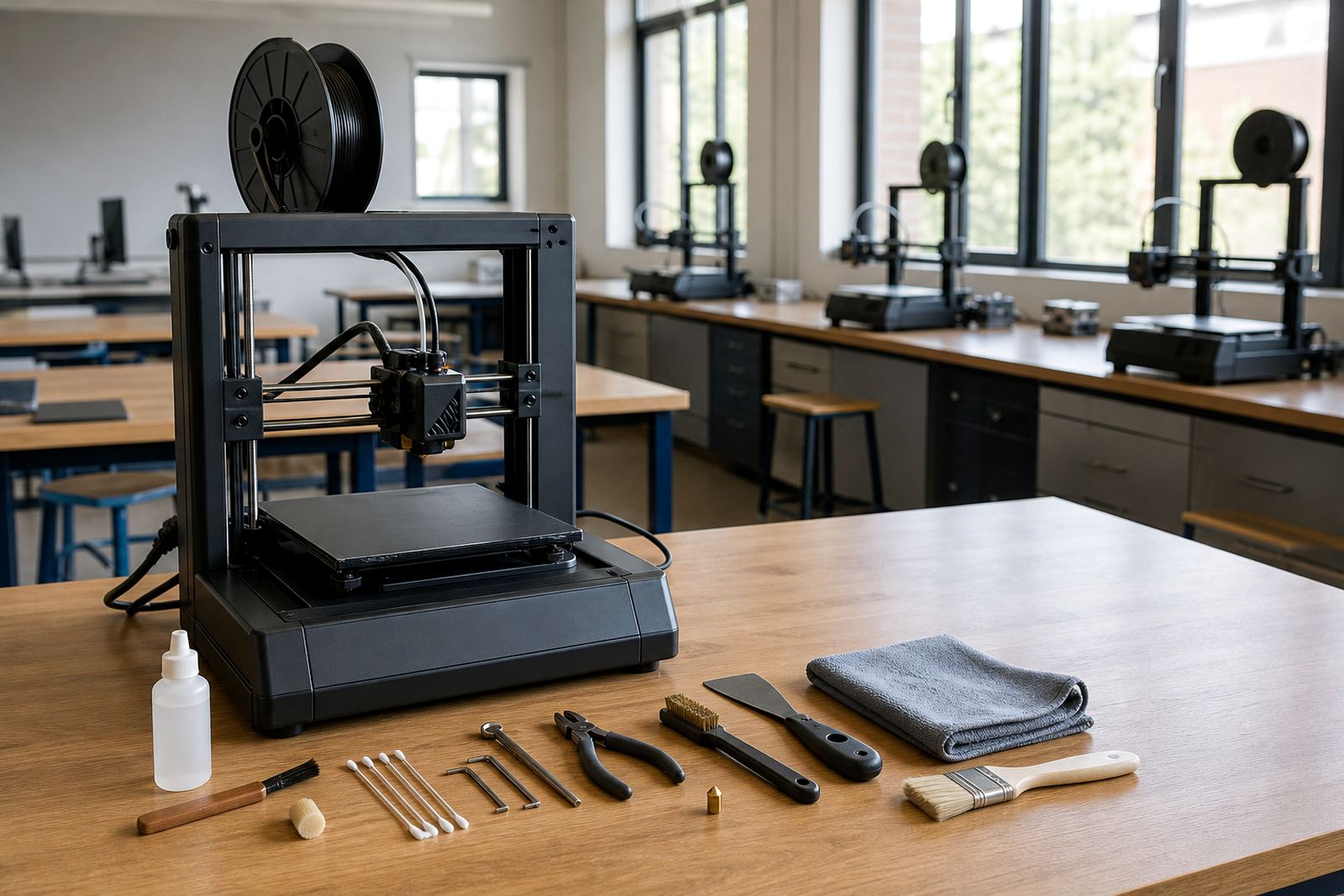
Contents can be supplied in a standard starter format or adjusted for a school lab with more than one machine. Most kits include hand tools, cleaning items and small consumables that support normal care routines without needing specialist equipment.
- Fine cleaning brushes for dust and loose filament
- Lint free cloths for build plates and exterior surfaces
- Needle tools or nozzle cleaning pins for light blockages
- Small scrapers for safe print removal when used carefully
- Lubricant or maintenance grease for selected moving parts, where suitable
- Spare nozzles, couplers, PTFE tubing or similar wear items, depending on printer type
- Storage pouch or organiser box for classroom use
Kit sizes can be matched to one printer, a small lab, or a multi room setup. In most schools the starter set suits entry level benchtop printers with common filament use, but the exact contents should be checked against the machine model before ordering.
Where this kit works best in schools
This product suits schools that already have printers in a lab, library, tech room or maker space and need a sensible way to manage upkeep. It is also useful for teachers who run short print sessions and want students to understand that maintenance is part of the process, not an afterthought.
- Teacher training rooms that manage one or two shared printers
- Learner maker clubs where multiple classes use the same equipment
- Holiday programmes with repeated printing over several days
- School labs in coastal areas where dust and humidity can affect storage
- Institutions that need simple routine care between lesson blocks
For schools in Gauteng and inland areas, the main concern is often dust and dry air. Along the coast, humidity can affect filament storage and metal parts if equipment is left uncovered, so a kit like this helps support better daily habits.
Installation, power and classroom setup
The Maintenance Starter Kit itself does not need installation, power or gas. It is a manual support kit used alongside the printer and any school lab layout. If the printer needs a work area, keep a stable table, clear access around the machine and enough space for safe cleaning.
For classroom use, keep the kit in a labelled container close to the printer station. Teachers should supervise cleaning, heating related checks and any work near hot ends or build plates. Basic safety rules matter, especially with younger learners: switch off the printer before maintenance, allow hot parts to cool and keep loose tools away from moving belts and fans.
Where load shedding is part of the daily routine, schools should also plan cleaning during off periods so no one is working on a live machine. A simple checklist helps keep the process orderly and reduces mistakes.
Care routine and servicing intervals
A school printer does best when maintenance is done regularly rather than only after faults appear. The starter kit supports small tasks that can be done after lessons, weekly or at the end of a term depending on usage.
- Wipe the build surface after each print session if residue is present
- Check for loose filament strands around the feeder and spool path
- Inspect belts, rollers and visible fasteners weekly
- Clear dust from fans, vents and the frame as needed
- Store spare parts in a dry cupboard away from direct sun and moisture
If the printer starts skipping layers, making unusual noises or showing poor first layers, the school should pause use and do a proper inspection. Routine care helps, but it does not replace professional servicing when a part wears out or a fault keeps returning.
What to check before you order
Before ordering, confirm the printer type, nozzle size and the level of support your school needs. Some schools only need a small starter pack for one classroom, while others need more consumables for several machines and more than one teacher.
- Printer make and model, or at least the nozzle and filament format
- How many printers will share the kit
- Whether you need basic cleaning items only or extra wear parts
- If the school wants one kit per room or a central maintenance box
- Storage conditions, especially in humid coastal towns
- Who will be responsible for daily checks and termly servicing
Schools in Stellenbosch and Paarl often want compact storage for smaller labs, while larger sites in Cape Town, Pretoria or Johannesburg may prefer a broader kit with more spare items. If you are setting up from scratch, a lab setup conversation can help match the kit to the actual classroom use rather than guessing.
Key facts
| Product type | Starter maintenance kit for school 3D printers |
|---|---|
| Use case | Routine cleaning, inspection and light servicing |
| Compatibility | Best suited to common benchtop filament printers; confirm model before ordering |
| Kit format | Single printer or multi printer school lab options |
| Power requirement | None, manual tools and consumables only |
| Typical storage | Dry cupboard or labelled container in the lab |