Why one project does not fit every learner
In any mixed class, learners arrive with different strengths. Some are quick with measurement and layout. Others are more comfortable with drawing, writing, speaking or hands-on assembly. If every learner is asked to finish the same object in the same way, a few will move ahead while others get stuck before the first layer is printed.
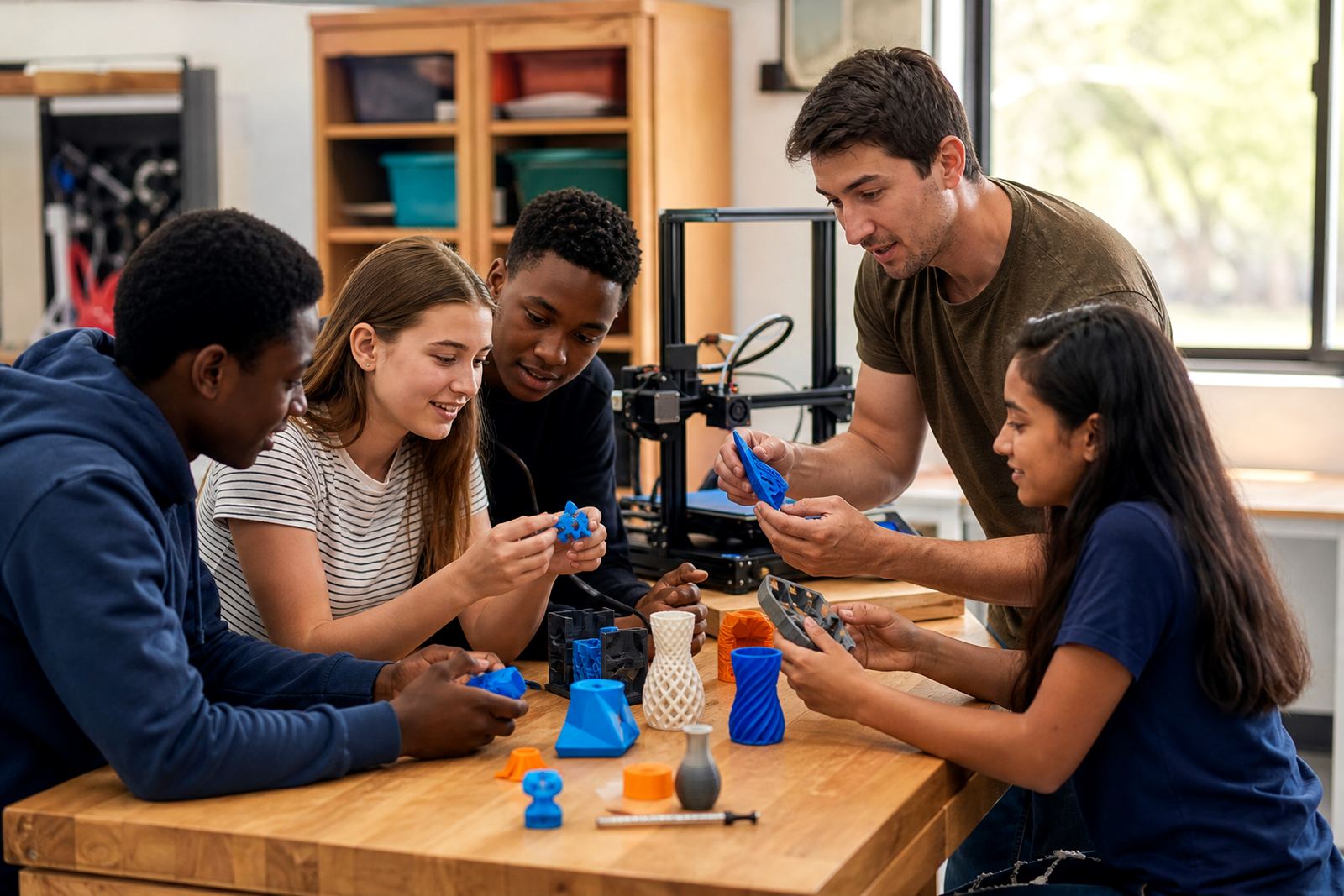
Inclusive project choices help by giving learners different ways to contribute to the same outcome. One group can model a part in CAD, another can measure and test fit, while another checks spelling on labels or records the steps. The class still works toward a shared goal, but no learner is limited to one narrow task. That matters in schools where confidence, language support and technical exposure vary from one child to the next.
Simple ways to vary a project without lowering standards
You do not need three separate lessons to make a project more inclusive. A single brief can allow different levels of challenge. For example, one learner prints a simple key ring, another adds a name tag, and a third designs a small clip with a moving part. Everyone learns the same core process, but the task has room for different ability levels.
- Offer a choice of objects with the same learning goal, such as a phone stand, cable clip or pencil holder.
- Allow learners to work in pairs so one can handle design while the other manages setup or measurement.
- Set optional extension tasks for faster groups, such as adding holes, text or a second component.
- Use the same safety rules and print checks for every version so standards stay consistent.
Teachers often find that varied choices reduce frustration. A learner who struggles with drawing may shine when assembling parts. Another who finds writing difficult may excel at checking tolerances and print quality. That balance keeps the room active and practical.
How project choice supports language and confidence
In South Africa, classrooms often include learners who speak different home languages and have different levels of confidence when working in English. A project that depends only on long written instructions can leave some learners behind. Project variety helps because learners can show understanding through models, labels, demonstrations and short oral explanations instead of only through writing.
A learner who is shy in group discussion may still take ownership of the measurement stage. Another may prefer to sketch the idea before speaking about it. When teachers recognise these different forms of participation, more learners stay engaged and fewer sit out quietly. That is important in project based work where the making process is often as valuable as the final print.
It also helps with behaviour. Learners tend to stay more settled when they can see a role that suits them. A clear role gives direction, and direction reduces wasted time.
A Stellenbosch classroom example that worked
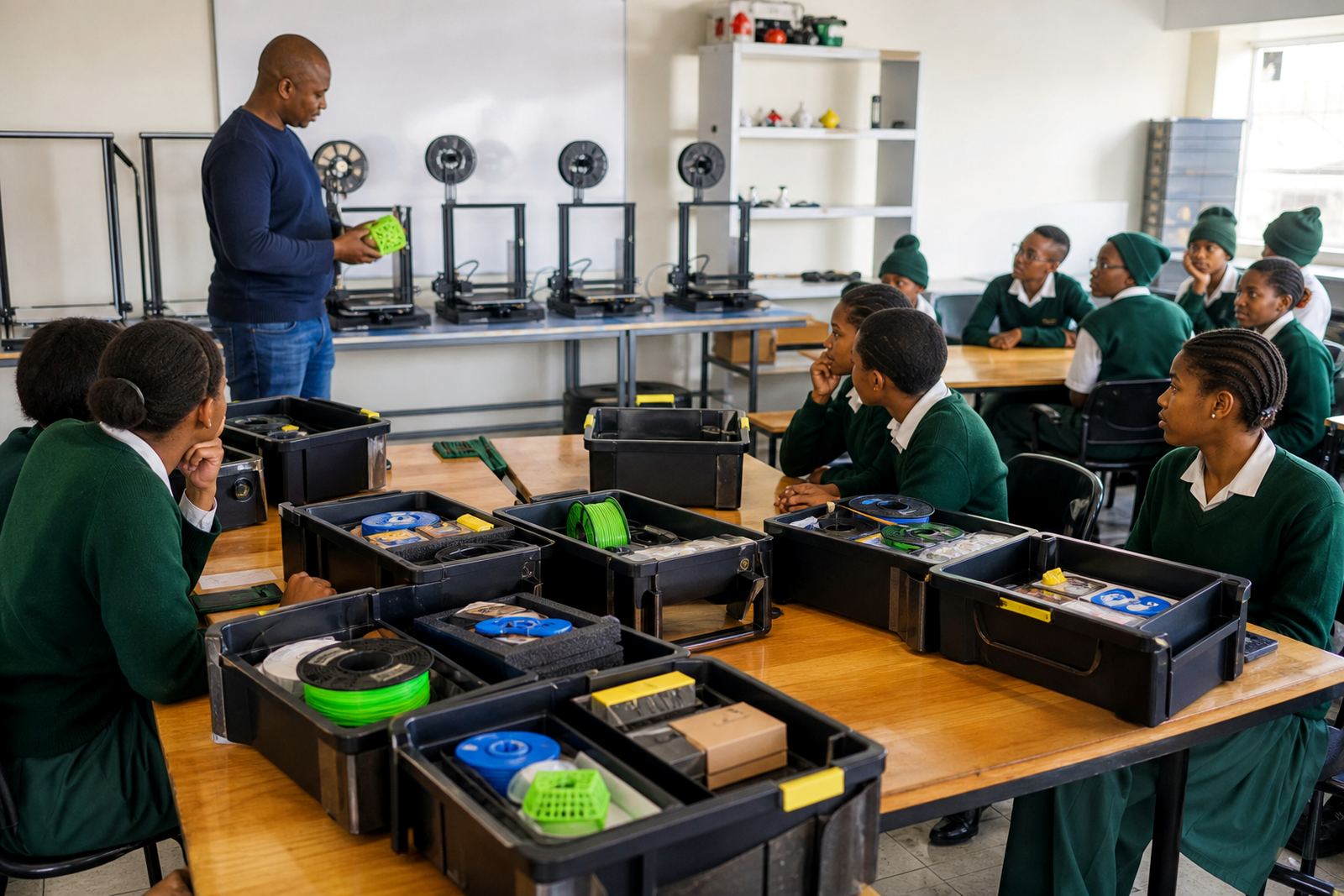
In a Stellenbosch school group, one class had learners with very different levels of experience. The teacher set one shared theme, namely a classroom organiser, but gave three options: a tray, a clip and a small stand. Each option used the same basic tools, the same filament and the same safety rules. Learners chose the version that matched their confidence and pace.
The stronger designers helped shape the digital model while others measured, checked fit or prepared the print bed. Some learners preferred finishing work, sanding and labelling, while others focused on presentation. By the end of the project, the class had a set of useful items and every learner had completed a meaningful part of the process. The teacher reported fewer dead moments and better participation from learners who usually held back.
That sort of outcome is practical, not theoretical. When a project can be approached in more than one way, more learners can succeed without lowering the standard of the final work.
What to include when planning inclusive making tasks
Good planning makes project choice easier for both teachers and learners. Start with one clear learning aim, then build a few different outputs around it. Keep the equipment familiar and the safety routine the same so the lesson does not become confusing. If the class is printing in a warm room or near a coastal site where humidity can affect material handling, store filament properly and keep the work area dry and tidy.
- Choose a shared learning goal, such as measurement, design, or printer operation.
- Plan at least two output options, one simple and one more advanced.
- Assign roles so every learner has a job, even if they are not doing the same task.
- Include a short check-in before printing to confirm size, fit and safety.
- Keep tools and hot parts under supervision and remind learners not to touch moving or heated components.
It also helps to think about time. Some learners need a quick win early in the lesson, while others need more time to complete detail work. A flexible project can accommodate both without changing the whole timetable.
Making room for more hands and more ideas
Inclusive project choices do more than keep a class busy. They create better participation, stronger teamwork and more practical learning. Learners who might have stayed silent can contribute through measuring, testing, documenting or improving a design. Those with stronger digital skills can take on harder modelling tasks while still supporting the group.
For schools across Cape Town, Johannesburg, Pretoria, Durban and Gqeberha, that approach fits the reality of mixed classes and busy timetables. It also suits schools that want to build steady, hands-on habits rather than rush through one-off activities. When project types vary, learners get more chances to take part meaningfully and teachers get a better view of who can do what. In the end, that is what good making is about: not only producing an object, but giving more learners a place in the process.